
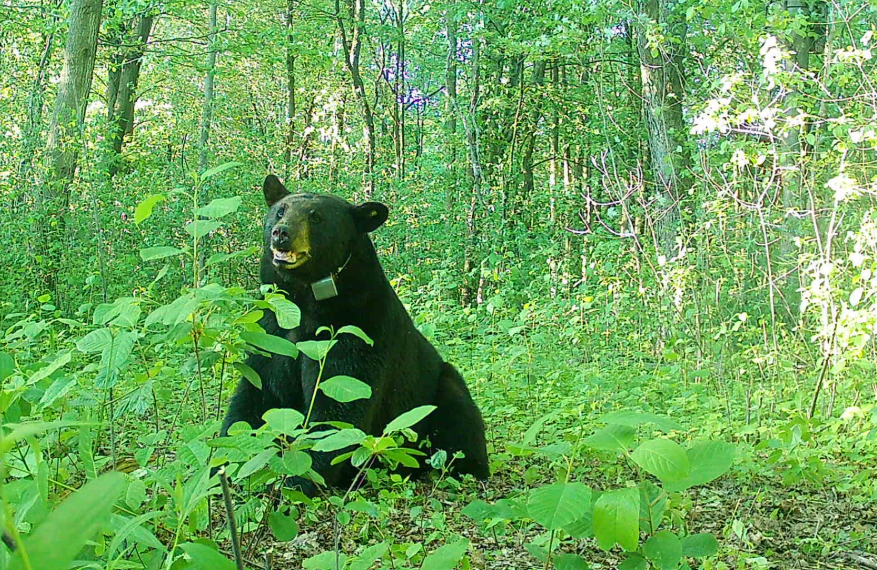

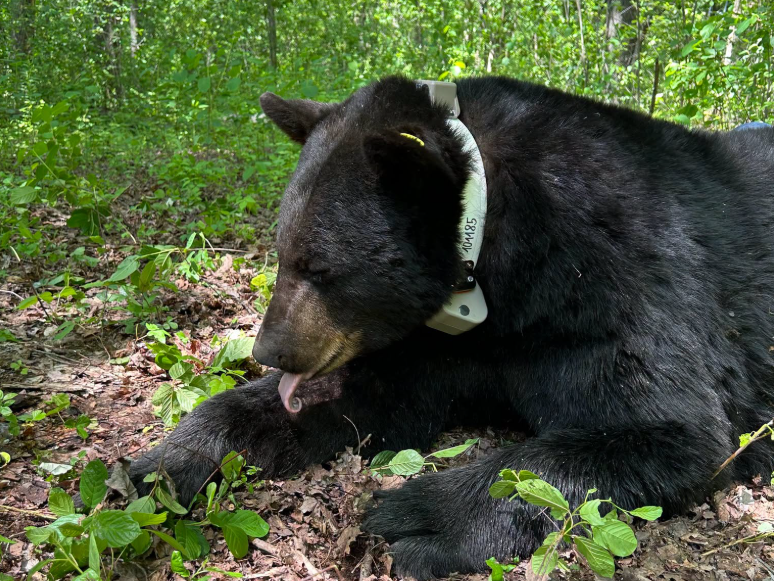
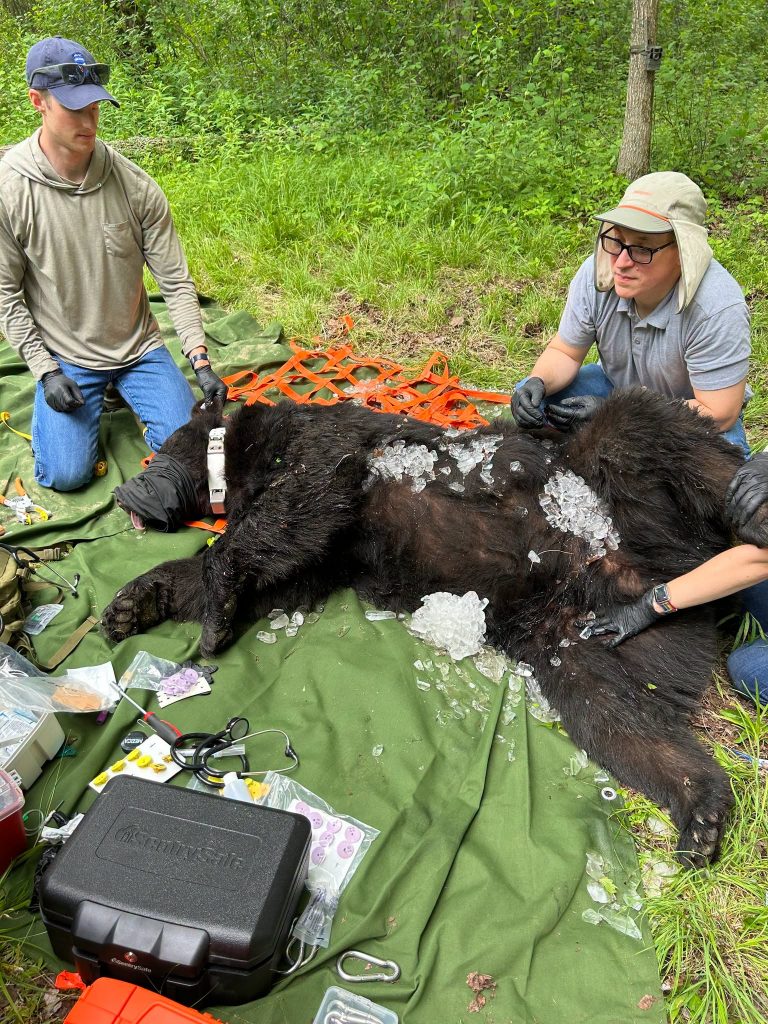
ASHTABULA COUNTY, Ohio — Wildlife researchers have placed a tracking collar on a massive 576-pound black bear in northeast Ohio as part of an ongoing effort to better understand the state’s growing black bear population.
The collaring operation was conducted by the Ohio Division of Wildlife and researchers from the Gantchoff Lab in Ashtabula County. The adult male black bear will now be monitored through a radio tracking collar, allowing researchers to study his movements, behavior, and habitat use.
According to wildlife officials, the bear weighed an impressive 576 pounds—nearly double the average weight of a male black bear in Ohio, which typically averages around 300 pounds.
“Thanks to this effort, the bear’s movement and behavior can now be tracked, helping to inform research and further our knowledge of this magnificent species,” the Division of Wildlife said in a social media post announcing the project.

Staff biologist Katie Dennison said she was surprised by the animal’s size.
“I didn’t expect to see a male bear this big in Ohio,” Dennison said, noting she believes the bear was likely traveling through the area during breeding season. She described the bear as “young middle-aged, but definitely an adult.”
The research effort comes as black bear sightings continue to rise across Ohio. According to the Ohio Black Bear Monitoring Report released in May, sightings reached an all-time high in 2025, with 537 reports documented in 69 counties statewide. That marks a significant increase from 370 sightings in 55 counties in 2024 and 260 sightings reported in 2023.
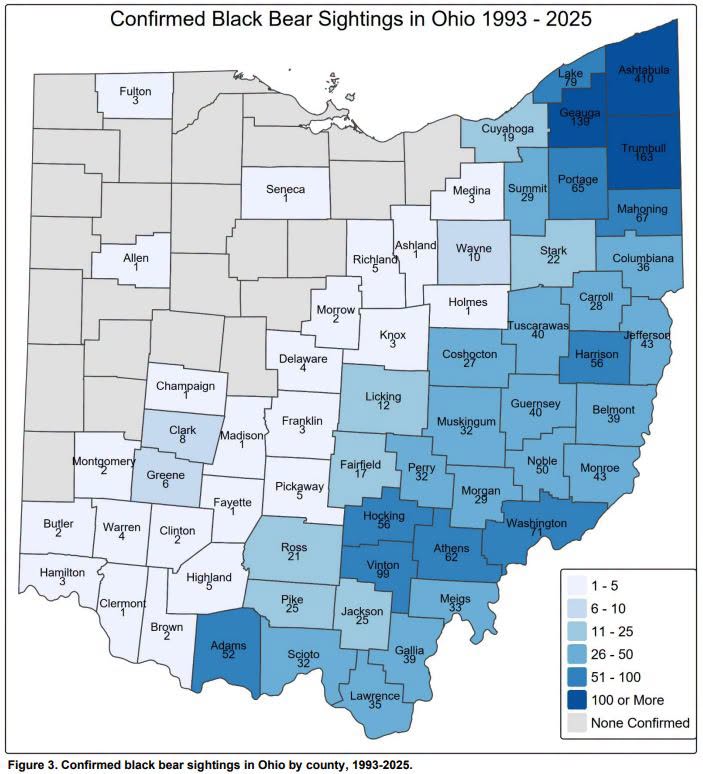
Black bears were eliminated from Ohio by the mid-1800s due to habitat loss and unregulated hunting but began gradually returning to the state during the 20th century as populations expanded from neighboring Pennsylvania and West Virginia. The Division of Wildlife has tracked black bear reports since 1993.
Most sightings continue to occur in eastern Ohio, particularly in counties bordering Pennsylvania. Researchers have also documented evidence of reproducing female bears in northeast Ohio, suggesting a small but growing resident population.
Wildlife officials say tracking large transient males such as the newly collared bear can provide valuable information about how bears move across Ohio and how the state’s recovering population is expanding.
Black bears can live 20 to 30 years in Ohio and the Midwest, according to wildlife experts