
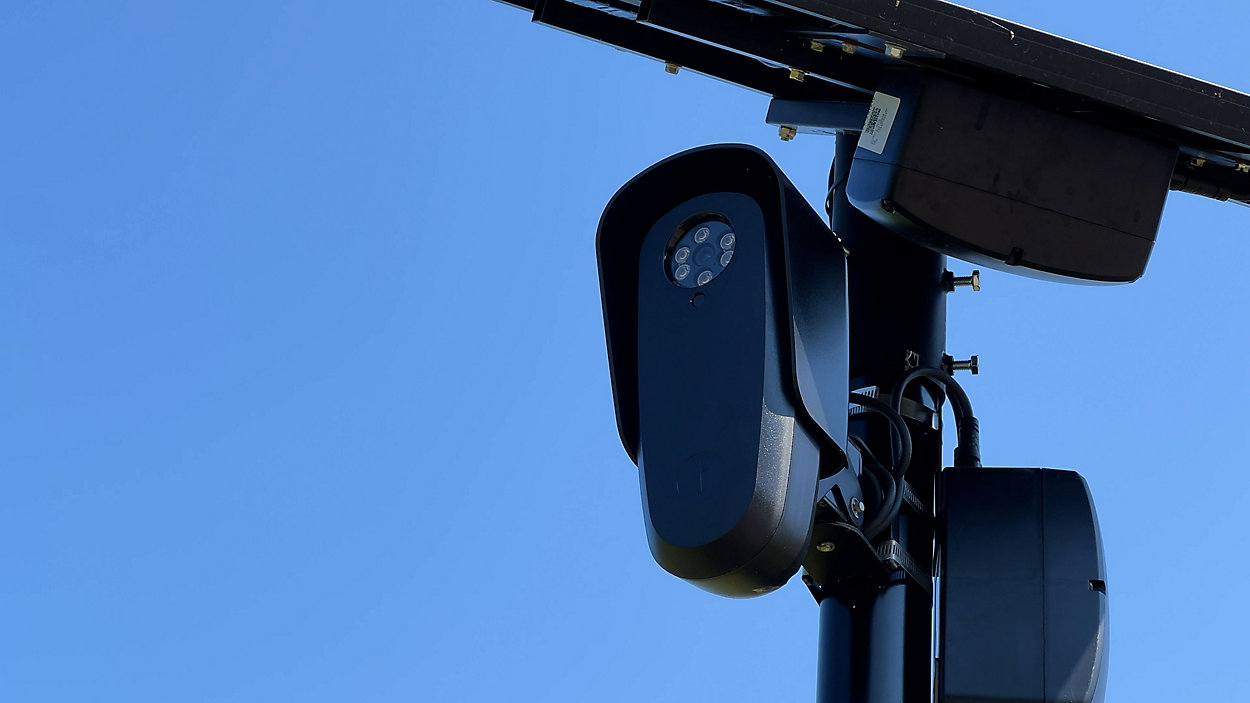

COLUMBUS, Ohio — In a direct pushback against mounting activist pressure, the Columbus Division of Police (CPD) strongly defended its use of Flock automated license plate readers on Wednesday. Police officials warned that completely removing the controversial technology would directly cause “fewer crimes to get solved.”
The defense came during a media briefing where CPD Deputy Chief Tim Myers unveiled the findings of an intensive internal audit of the city’s Flock data. The audit was released ahead of a high-stakes Columbus City Council public hearing scheduled for August 10.
The Audit Findings: Tracking Immigration Searches
Activists in Columbus and nationwide have demanded the total removal of Flock cameras, citing severe privacy concerns and potential weaponization by federal immigration authorities. Several regional cities—including Dayton, Ohio, and Newport, Kentucky—have already succumbed to pressure and removed their networks.
The Columbus audit revealed that out of nearly 20 million total system searches since November 2023, just over 15,000 (less than 1%) were tied to immigration enforcement. Locally, CPD characterized the use as “nearly nonexistent.”
However, the audit did reveal notable federal and outside agency tracking:
- U.S. Border Patrol & Homeland Security: Searched Columbus’ data more than 700 times.
- 287(g) Partner Agencies: Law enforcement agencies operating under voluntary immigration-enforcement partnerships with ICE conducted roughly 600 searches.
- Columbus Police Activity: CPD officers searched the data for immigration-related reasons only 20 times. However, Myers noted they are aggressively investigating a single user who searched the system six times using the specific justification “ICE.”
“We’re looking into that, and we’re going to get that answer,” Myers told reporters.
“Fewer Crimes Will Be Solved”
Deputy Chief Myers did not mince words regarding the consequences of a total ban, noting that Flock cameras directly aided in solving roughly 60% of Columbus’ homicides last year.
As a prime example, Myers pointed to the December 2025 double murder of Spencer and Monique Tepe in Weinland Park. Flock cameras successfully tracked the suspect—Monique’s ex-husband, Michael D. McKee—as he fled the scene, directly leading to his arrest. McKee is currently awaiting trial on charges of aggravated murder.
“The community will get exactly what it asks for,” Myers warned. “Part of my job, though, is to make it very clear that we will solve fewer crimes. That is demonstrable and beyond dispute.”
Rapid Implementation of Data Safeguards
To alleviate community anxiety, CPD and city leaders have rapidly implemented a series of strict data-sharing firewalls to align the technology with local values:
- Search Filters (December): Enabled filters to block CPD devices from appearing in external searches related to immigration enforcement or reproductive healthcare.
- The “287(g) Opt-Out” (April): Requested that Flock completely block data-sharing with any agency carrying immigration enforcement authority.
- National & Statewide Blackouts: Police Chief Elaine Bryant ordered CPD to pull out of nationwide data sharing. Last week, Mayor Andrew Ginther took it a step further, ordering an immediate halt to all statewide sharing.
According to Myers, if these newly implemented safeguards had been active since day one, the 15,000 immigration-related searches would have plummeted to just 300. Furthermore, those remaining 300 would be restricted to Homeland Security criminal investigations involving child exploitation, human trafficking, and international abductions.
Pressure on Flock’s Corporate Leadership
When asked if CPD fully trusts Flock Safety, Myers avoided a direct answer. The relationship between the city and the tech firm has grown visibly tense, particularly after Flock’s CEO controversially referred to anti-surveillance activists as “terroristic” in an interview with Forbes.
Myers confirmed he is personally lobbying the corporation to give cities total autonomy over their data.
“I have challenged Flock to be responsive to the needs of this community,” Myers said. “And I’ve made it very clear that I don’t need their help communicating with the public, or with council, or with any other stakeholders.”
Public Hearing Information
The public will have its chance to weigh in on the future of surveillance technology in the capital city. The Columbus City Council has scheduled the public hearing for 4:00 PM on Monday, August 10.