
LEXINGTON & CONCORD – Two hundred and fifty years ago today, a thin mist clung to the Massachusetts countryside as the trajectory of global history shifted forever. Today, thousands gathered across Lexington Green and the Old North Bridge in Concord to commemorate the semiquincentennial of the battles that ignited the American Revolutionary War.
What began as a British mission to seize colonial gunpowder and arrest rebel leaders became the definitive “point of no return” for thirteen colonies and the British Empire.
The Morning That Changed Everything
In the early hours of April 19, 1775, approximately 700 British regulars, under the command of Lieutenant Colonel Francis Smith, marched toward Concord. Their goal was to destroy military supplies stored by the Massachusetts provincial congress. However, the “midnight riders”—including Paul Revere and William Dawes—had already sounded the alarm.
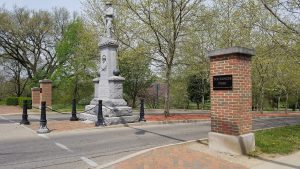
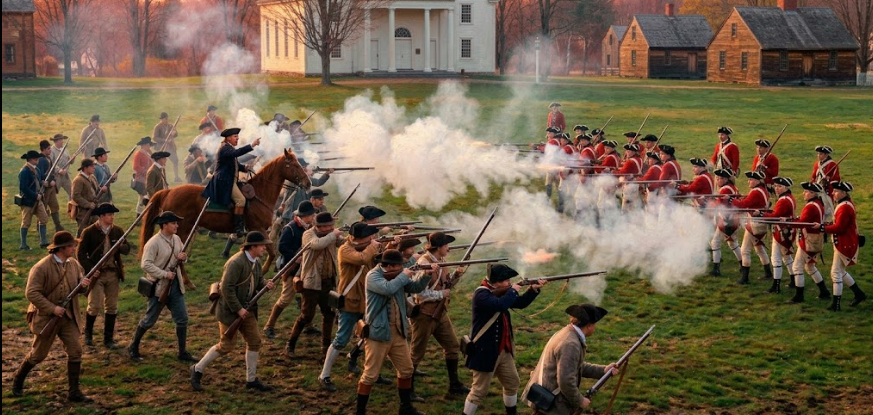
- The Stand at Lexington: At dawn, the British vanguard encountered roughly 80 militiamen led by Captain John Parker on Lexington Green. Parker famously told his men: “Stand your ground; don’t fire unless fired upon, but if they mean to have a war, let it begin here.”
- The Mystery Shot: To this day, historians cannot definitively say who fired first. A single shot rang out—the “shot heard round the world”—prompting a British volley that left eight Americans dead and ten wounded.
The Tide Turns at Concord
By the time the British reached Concord later that morning, the “Minutemen” had arrived in force. At the Old North Bridge, colonial militia did the unthinkable: they fired upon British soldiers, marking the first time American revolutionaries were ordered to fire on the King’s troops.
“By the rude bridge that arched the flood,
Their flag to April’s breeze unfurled,
Here once the embattled farmers stood,
And fired the shot heard round the world.”
— Ralph Waldo Emerson, “Concord Hymn” (1837)
The Brutal Retreat
The battle didn’t end at the bridge. The British retreat to Boston became a 16-mile gauntlet of fire. Thousands of colonial militia, utilizing guerrilla tactics learned during the French and Indian War, sniped at the British columns from behind stone walls and trees.
The Toll of the Day:
| Side | Killed | Wounded | Missing/Captured |
| British (Regulars) | 73 | 174 | 26 |
| Colonial (Militia) | 49 | 39 | 5 |
A Legacy Revisited
Today’s 250th-anniversary ceremonies featured a massive reenactment of the Lexington skirmish, followed by a ceremonial “march to the bridge.”
While the Revolutionary War had been brewing through years of “taxation without representation” and civil unrest in Boston, April 19, 1775, transformed a political protest into a full-scale war for independence. Within a year of these shots, the Continental Congress would adopt the Declaration of Independence, forever altering the landscape of modern democracy.
As the sun sets over the battlefield today, the tolling bells of Massachusetts churches remind the world that 250 years later, the echoes of those first shots have yet to fade.