

COLUMBUS, Ohio — A groundbreaking economic analysis released Wednesday, March 18, 2026, reveals that Ohio’s townships are no longer just quiet rural stretches—they are the high-octane engine behind nearly one-quarter of the state’s entire economy.
The study, The Economic Contribution of Ohio Townships, commissioned by the Ohio Township Association (OTA) and conducted by Silverlode Consulting, shows that businesses within Ohio’s 1,308 townships generate a massive $413.64 billion in economic activity and support more than 1.8 million jobs.
The “Township Advantage”: Lower Taxes, More Jobs
The data highlights a striking “Township Advantage” for residents and business owners alike. While townships provide essential services like police, fire, and snow removal, they do so at a fraction of the cost of their municipal neighbors.
Key Financial Findings:
- Tax Savings: Local taxes collected per capita in townships are 57% lower than in cities and villages.
- Household Impact: On average, a township household pays about $1,116 less annually in local taxes.
- Business Incentives: Commercial tax rates in townships sit about 21% lower than in municipalities, largely because townships do not levy income taxes.
A Thriving Workforce
Townships are currently outperforming urban centers in employment stability. The study found a township unemployment rate of just 2.4%, significantly lower than the 3.6% rate seen in municipal areas.

“From manufacturing and logistics to healthcare and small business growth, township communities are powering jobs and opportunity across the Buckeye State,” said Kyle A. Brooks, OTA Director of Governmental Affairs.
By the Numbers: Townships vs. Municipalities
| Category | Townships | Municipalities |
| Unemployment Rate | 2.4% | 3.6% |
| Avg. Annual Local Tax | ~$1,116 Less | Baseline |
| Property Tax Millage | 17% Lower | Baseline |
| Consumer Spending | 18% Higher | Baseline |
Diverse Industry Growth
The analysis dispels the myth that township economies are purely agricultural. While farming remains vital, the largest employment sectors now include:
- Retail Trade
- Healthcare & Social Assistance
- Manufacturing
- Construction & Real Estate
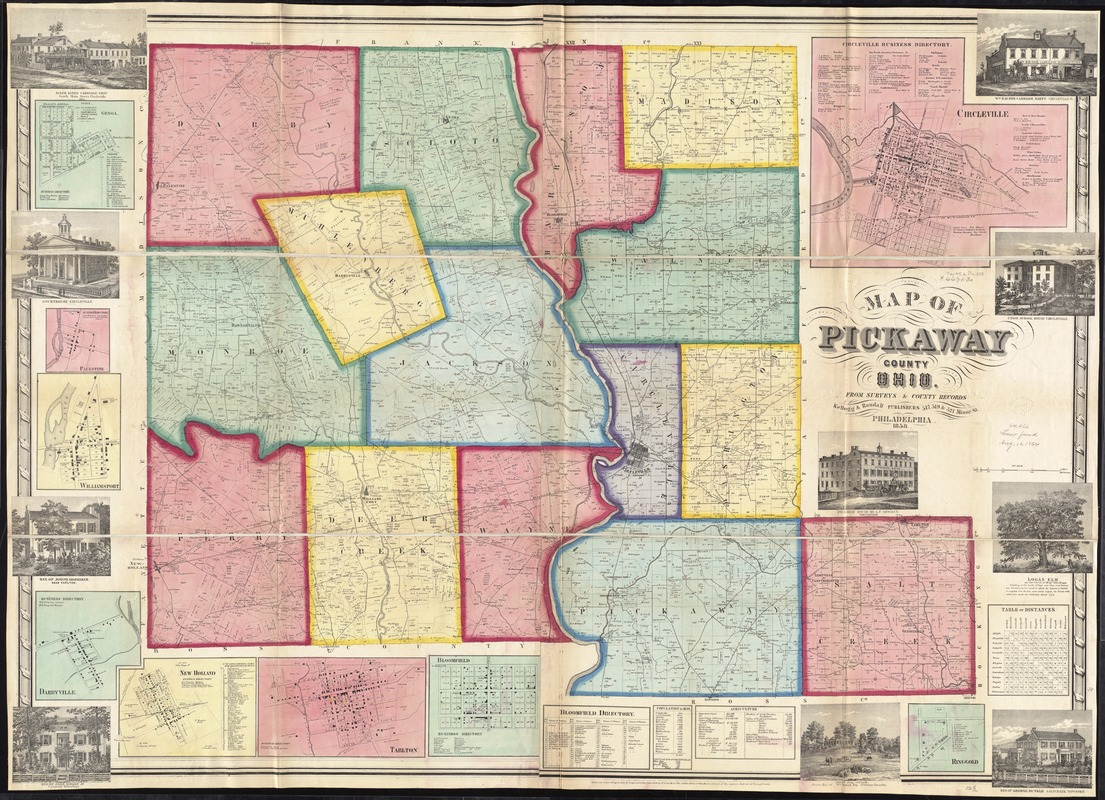
In Pickaway County, the area around US-23 and the Northern border is a perfect example. You have massive logistics and manufacturing hubs that technically sit in a township. They utilize the highway access and the vast open space, while often coordinating with the county or nearby municipalities for utility access.
Fun Fact: Even the giant Intel plant being built in Licking County is largely centered on land that was formerly township territory (though much was annexed by New Albany to provide the massive amount of water needed for chip making).
By creating $210.4 billion in added value through wages and profits, township-based businesses are sustaining regional supply chains and driving the state’s post-2025 growth.