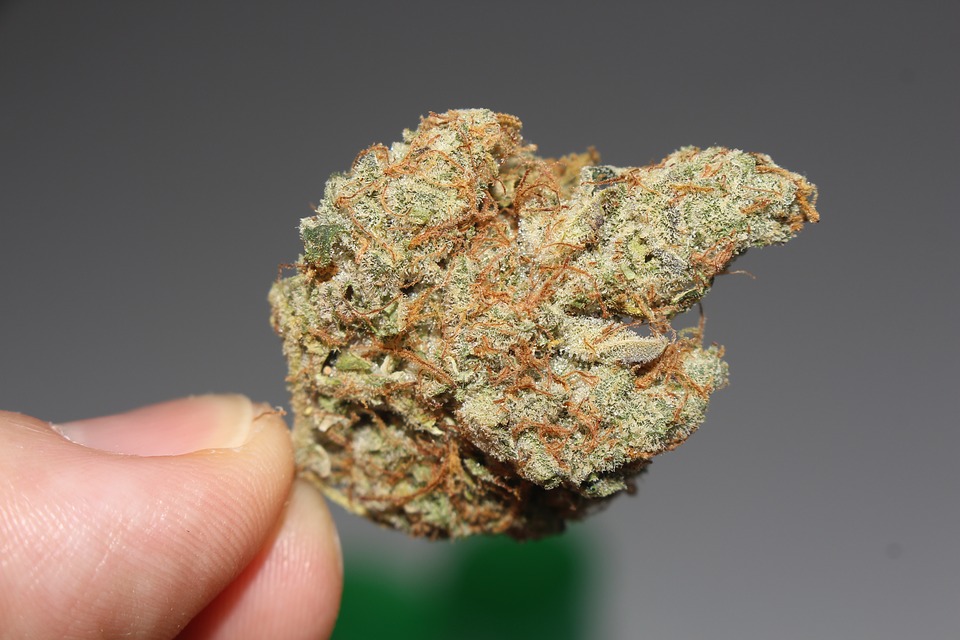

WASHINGTON — President Donald Trump on Thursday signed an executive order directing federal agencies to begin the process of reclassifying marijuana under federal law, removing it from Schedule I of the Controlled Substances Act and placing it into Schedule III.
The move represents one of the most significant changes to federal marijuana policy in more than 50 years. While the action does not legalize marijuana at the federal level, it formally recognizes that cannabis has accepted medical uses and a lower potential for abuse than substances currently listed as Schedule I, such as heroin.
“People have been begging for me to do this for years,” Trump said while announcing the order. “This action has been requested by American patients suffering from extreme pain, incurable diseases, aggressive cancers, seizure disorders, neurological problems, and more—including numerous veterans and older Americans whose quality of life has been severely diminished.”

The executive order directs the U.S. attorney general to move “as expeditiously as possible” to complete the rulemaking process required to shift marijuana to Schedule III. That change is expected to ease long-standing barriers to scientific research and provide financial relief to state-licensed cannabis businesses, which have been unable to claim standard tax deductions under IRS Code 280E due to marijuana’s prior Schedule I status.
Trump emphasized that the order does not legalize recreational marijuana use. “This does not legalize marijuana in any way, shape, or form,” he said. “It simply recognizes medical value and puts an end to outdated federal classifications.”
CBD and Hemp Policy Changes
In addition to marijuana reclassification, the directive calls on Congress to review and potentially update federal hemp laws to ensure broader access to full-spectrum cannabidiol (CBD). The administration said the goal is to protect non-intoxicating hemp-derived products and explore options for allowing Medicare coverage of doctor-recommended CBD.
A White House official said the Centers for Medicare & Medicaid Services (CMS) will announce a pilot model allowing select beneficiaries to receive CBD at no cost when recommended by a physician.
Health and Human Services Secretary Robert F. Kennedy Jr. acknowledged the complexity of the issue, noting that cannabis policy has long divided the country.
“On one side, patients and physicians report remarkable benefits for chronic pain, epilepsy, PTSD, and chemotherapy-induced nausea,” Kennedy said. “On the other side, there are legitimate concerns about addiction, psychosis, and public health impacts—particularly among young people.”
National Legal Landscape
As of late 2025, marijuana laws vary widely across the United States:
- Recreational marijuana is legal in 24 states, including Ohio, which approved adult-use cannabis in late 2023, as well as in Washington, D.C., and several U.S. territories.
- Comprehensive medical marijuana programs are in place in 40 states.
- An additional 8 to 10 states permit limited low-THC or CBD-only medical use.
- A small number of states still prohibit marijuana entirely, though that number continues to shrink.
While the federal reclassification will not override state laws, experts say the shift could encourage additional states to modernize their policies and reduce legal uncertainty for medical providers, researchers, and regulated cannabis businesses.
The administration described the executive order as a balance between expanding access to evidence-based medical treatments and maintaining safeguards to protect public health, particularly for minors.