
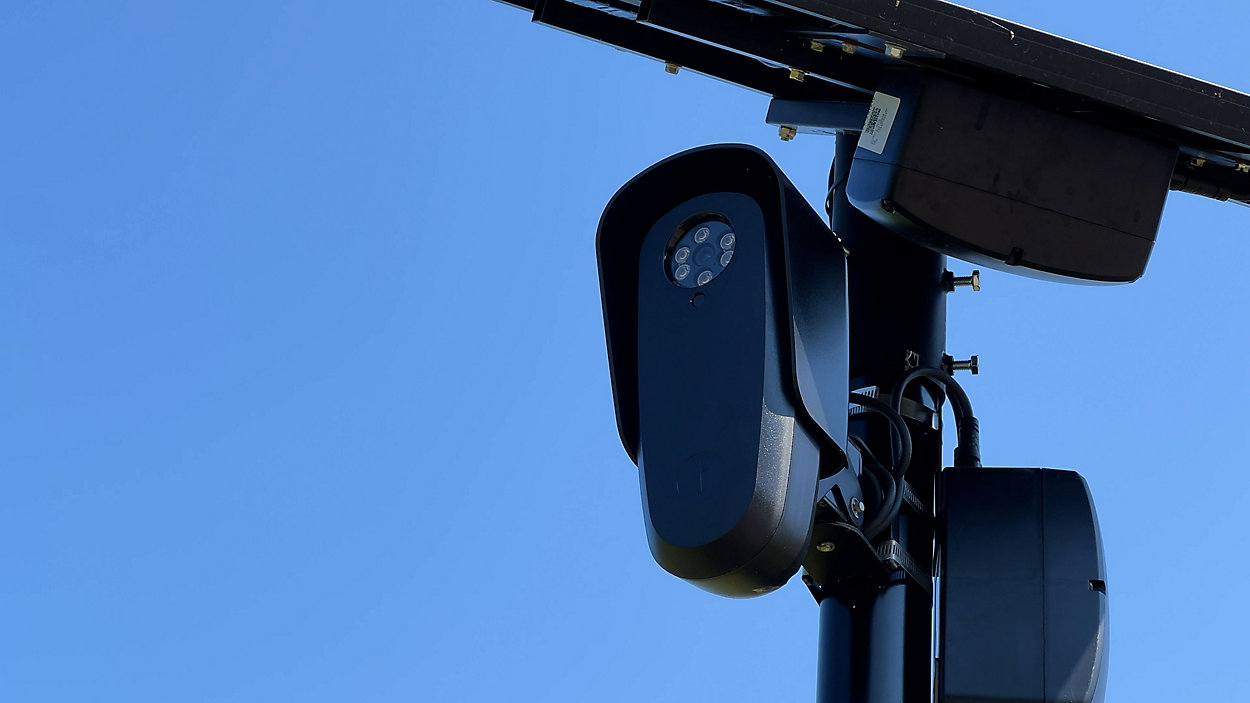

ATLANTA — Aug. 13, 2026 — Flock Safety is changing several policies governing its automated license plate reader (ALPR) technology, including reducing its recommended default data-retention period from 30 days to seven days and requiring law enforcement agencies to adopt additional safeguards designed to prevent misuse.
The company announced the changes Thursday, saying they are intended to strengthen privacy, accountability, data security and transparency while maintaining the technology’s role in helping law enforcement investigate crimes.
Under the new policy, Flock is recommending that ALPR data be retained for seven days rather than the previous 30-day default. The company said its analysis found that more than 90% of searches conducted without a complete license plate are performed within a week.
Flock is also introducing a feature called Evidence Mode, which will allow investigators to preserve specific ALPR data associated with an active investigation for longer periods. The preserved information will be placed in cold storage and remain subject to applicable laws and local policies.

Existing customers will retain their current, locally approved retention periods. Communities that adopt the seven-day recommendation will receive Evidence Mode at no additional cost.
New restrictions on data sharing
Flock is also introducing offense filtering for data sharing, giving communities greater control over the types of investigations for which other law enforcement agencies can search their cameras.
For example, an agency could allow another department to search its cameras for stolen vehicles, missing persons or violent crimes while preventing searches related to other categories of offenses.
Flock said the change is intended to allow agencies to collaborate while giving local governments greater control over how their ALPR data is shared.
Increased oversight of law enforcement searches
The company is also making its Audit Assistance system mandatory for all law enforcement customers by the end of 2026.
Audit Assistance monitors system activity for unusual behavior and flags activity for review by an agency administrator. Flock said the system has already been voluntarily adopted by more than one-third of its customers.
The company said reviews conducted through the system have recently been associated with arrests of several law enforcement officers accused of improperly using the technology.
Flock will also introduce proactive lockouts, which can automatically suspend a user’s access when activity meets defined criteria for abnormal behavior. Access would remain suspended pending administrator review.
Additionally, Flock will require case codes for law enforcement searches by the end of the year. Agencies will be permitted to bypass the requirement during emergencies, but those searches will automatically be flagged for administrator review.
Customers retain ownership of data
Flock also addressed concerns surrounding ownership of information collected by its cameras.
The company said its customers own the data captured by their ALPR cameras and determine who can access and share that information.
Flock acknowledged that some of its contractual language has caused confusion and said it plans to publish a plain-language explanation of its contracts on its website.
Security requirements strengthened
Flock said it has hired independent cybersecurity firm Bishop Fox to conduct a review of its products and security capabilities.
The company plans to publish a summary of the review’s findings and its response to any identified issues in September.
Flock is also launching a Coordinated Vulnerability Disclosure program, providing security researchers with a formal process for reporting potential vulnerabilities.
The company said multi-factor authentication is now mandatory for anyone logging into Flock’s systems.
Company addresses ALPR accuracy
The policy announcement also comes as questions have been raised about the accuracy of automated license plate reader alerts.
Flock said its technology uses machine-learning models trained on license plate designs from all 50 states and assigns a confidence score to every plate reading.
According to the company, low-confidence readings are filtered out and are not sent to officers as alerts.
Flock said its system also compares the detected license plate and issuing state against a law enforcement hotlist before an alert is generated.
The company emphasized that an ALPR alert is intended to serve as an investigative lead rather than proof that a vehicle or person is involved in a crime.
Flock said officers are expected to visually confirm the license plate and ensure any traffic stop complies with applicable law and department policy.
The company reported fewer than nine human-reported errors for every 1 million alerts.
Transparency portals
Flock also encouraged law enforcement agencies to establish public Flock Transparency Portals.
According to the company, more than 1,500 agencies have already published a portal. The portals can provide information about an agency’s ALPR policies, data-retention period, sharing partners and search activity.
Flock said the goal is to give residents greater visibility into how the technology is being used in their communities.
Flock says changes balance safety and privacy
Flock said the changes follow years of discussions surrounding the use of ALPR technology and concerns about privacy, law enforcement accountability and data security.
The company said its technology currently assists law enforcement agencies in solving more than 1 million crimes annually. In July alone, Flock said its systems helped detect more than 1,000 missing people and more than 20,000 stolen vehicles.
The company acknowledged that the new safeguards do not represent the end of the debate surrounding ALPR technology.
“These changes reflect years of work and deliberation,” Flock said in announcing the policy changes. “They are not the end of that work, but simply the continuation of our commitment to both safety and privacy.”
Flock said additional updates will be announced as the new safeguards are implemented over the coming months.