
Chillicothe — One pump broke, another had been unusable, but a third was soon welded back together by U.S. Paper Mill over the weekend to resume control of a notorious plume of groundwater pollution at the former Wear-Ever factory on Eastern Avenue.
I heard insight on the situation around the failed paper mill well pump at the data center zoning open house in the old armory on November 16th, 2026 (see my upcoming story on that).
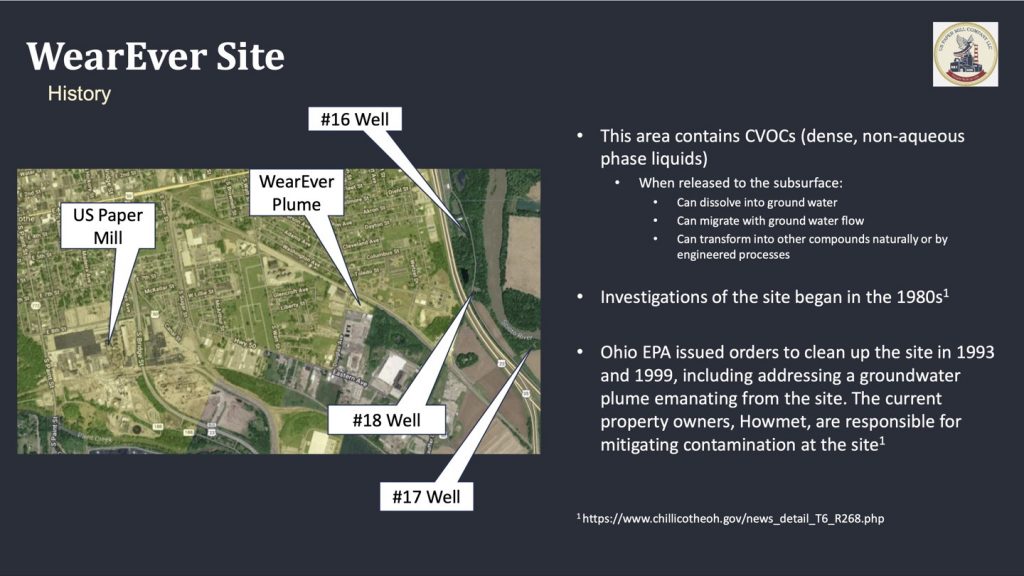
Staff from U.S. Paper Mill LLC were in attendance, including Aaron Anders. He is the Utilities Superintendent for the company that owns the former Mead and Chilpaco paper mills – which includes three large old industrial wells close to the Scioto River near the US 23 / 35 freeway, east of Eastern Avenue.
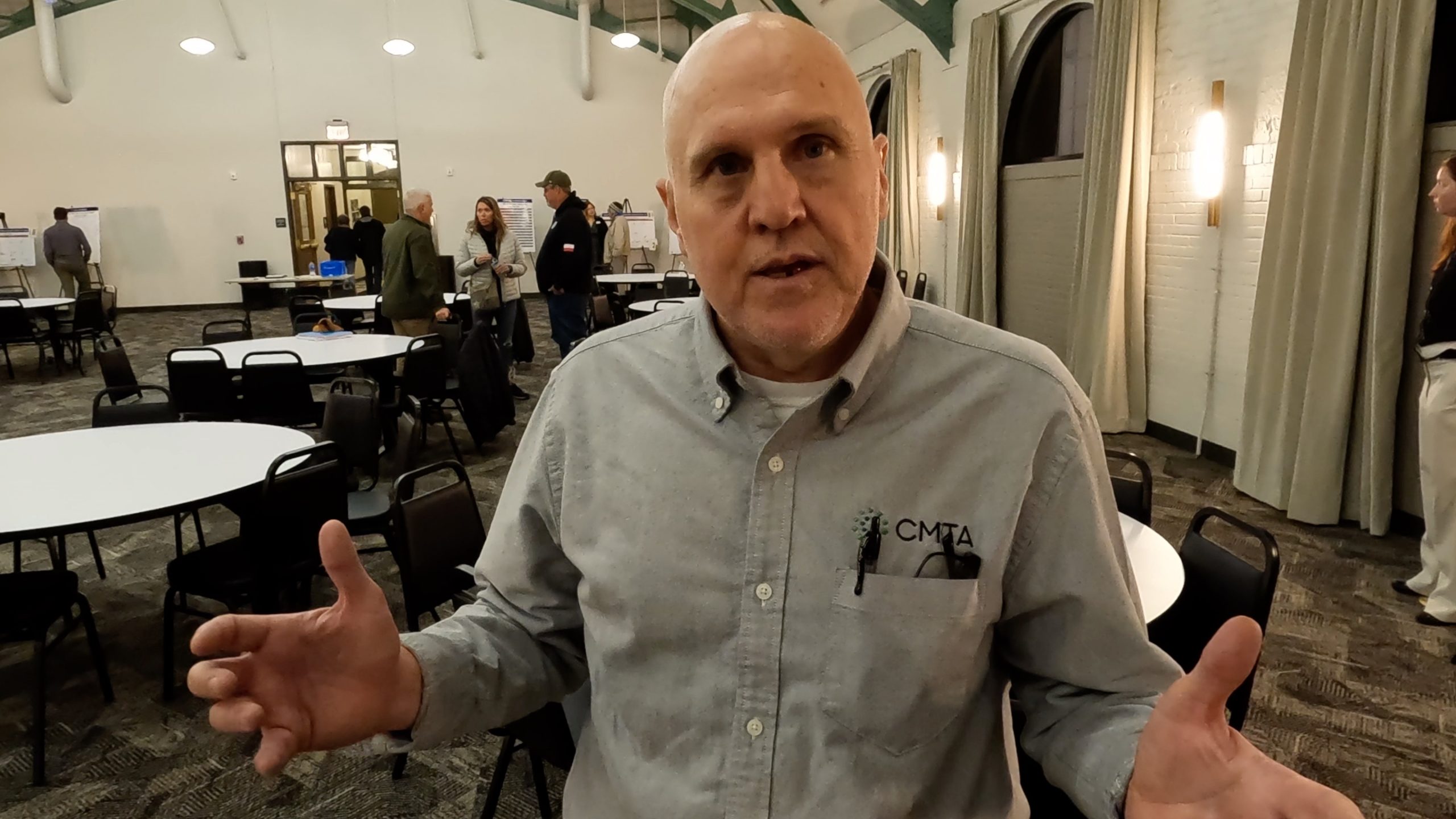
You can hear him in his own words below.
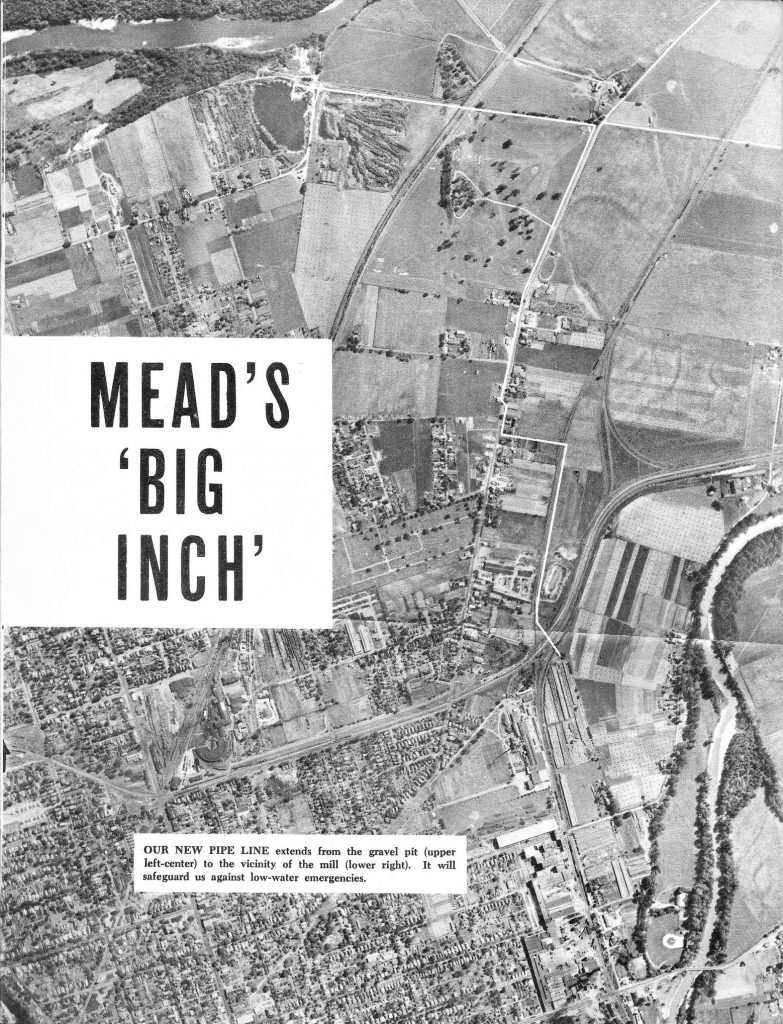
A December 1950 issue of “Mead Reporter,” the official magazine for the paper mill, reported on a 2 1/4 mile-long, 20-inch-diameter pipeline from the the far eastern corner of the mill property to a well that had been built at a gravel pit beyond the east edge of Chillicothe. (The US 23/35 bypass was later built through that pond.)
The pump there was planned to move 5M gallons a day, and two more pumps were to be added – apparently constituting what are designated as wells number 16, 17, and 18.
The pipeline ran past – and under the driveway of – the new Alcoa plant on Eastern Avenue, later Wear-Ever, and now owned by Howmet Aerospace. Pollution from the cookware factory has pooled in water in the deep gravel deposit under it, with fears that it could migrate with the groundwater.
The high volume of water pumped by the paper mill, and continued after its closure last year, is presumably keeping the plume in check. Last summer, activists urged the City of Chillicothe to take action about the situation.
(Read more on the 1950 article in my two-part Facebook post from last year, inspired by scans of the magazine by Brad Purdum and his posts to “Chillicothe Ohio Papermakers” on Facebook.)
On November 12th, U.S. Paper Mill reported that a pump at one of the wells that has been controlling the plume failed. I knew Anders from my previous meetings with staff, and at the zoning open house on Monday evening, I asked him for details about the situation.
He said that the Ohio EPA has an agreement with Howmet, that pumps at Number 17 or 18 wells need to run to keep the water table low to contain the plume – or else Howmet must come up with another solution.
U.S. Paper Mill has pointed out that they are paying to run, maintain, and monitor the pumps – as well as process the unused water from them in the former paper mill wastewater treatment plant – at considerable expense.
Howmet and the Ohio EPA do not pay anything for that.
Anders said that the three wells have two pumps each, where Mead had built-in redundancy. A pump on Number 18 well had failed, with cracks in its shaft. A second pump there had never been fixed and was not running when the paper mill was sold in October of last year.
So, for the sake of time, he said his crew switched to one of the pumps on Well 17 and worked several hours to weld its shaft and get it running – to pump at least 500 gallons a minute to keep the the water table under control, as calculated by the Ohio EPA in the 1980s.
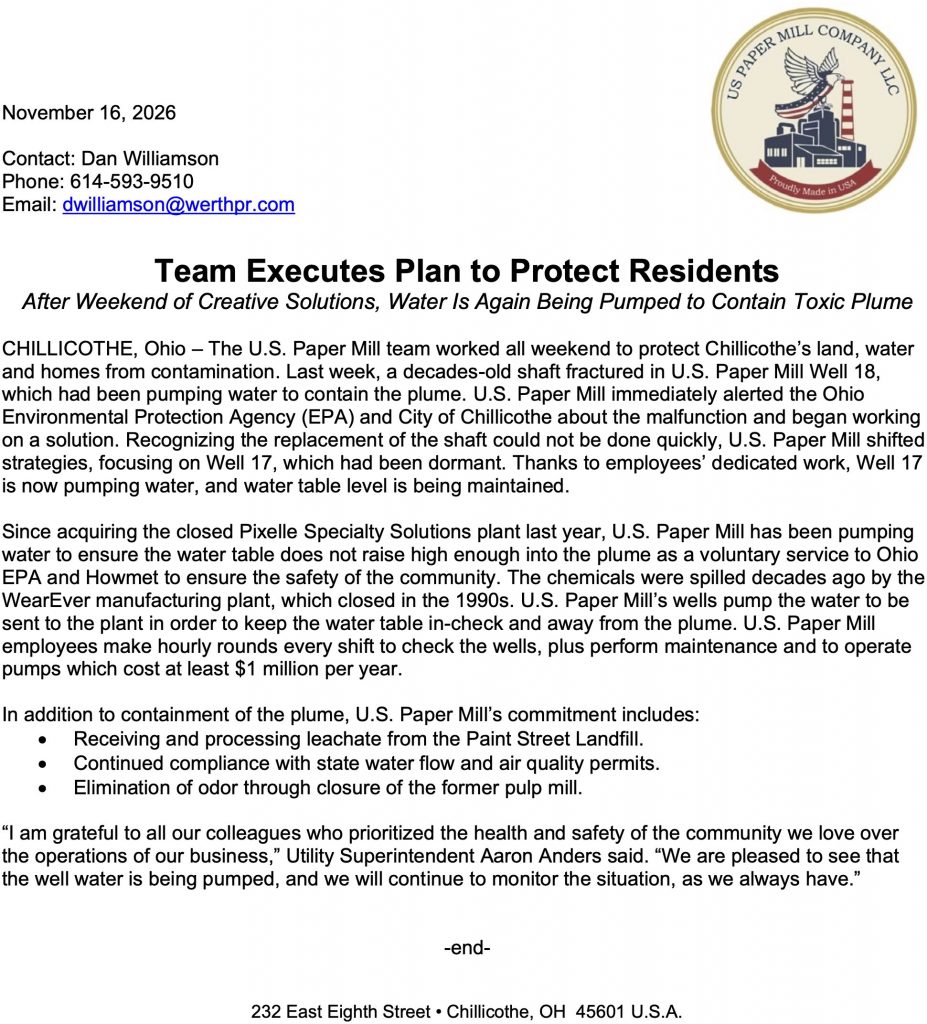
U.S. Paper Mill has pointed out that they are paying to run the pumps – as well as process the unused water from them in the paper mill wastewater treatment plant – at considerable expense.
See their slide show on their environmental effort in my September story, which includes mapping of the well locations, industrial sites, and more.
The situation points out the complex connections among the former Mead / Chilpaco paper mills, John Todoroki who founded U.S. Paper Mill LLC and U.S. Glove Company, Alignment Engine and the proposed data hall / data center at the “Chilpaco Innovation Campus,” the groundwater plume of toxins under former Wear-Ever factory now owned by Howmet Aerospace…and hopes for regained local jobs, and city tax revenue…and more.