
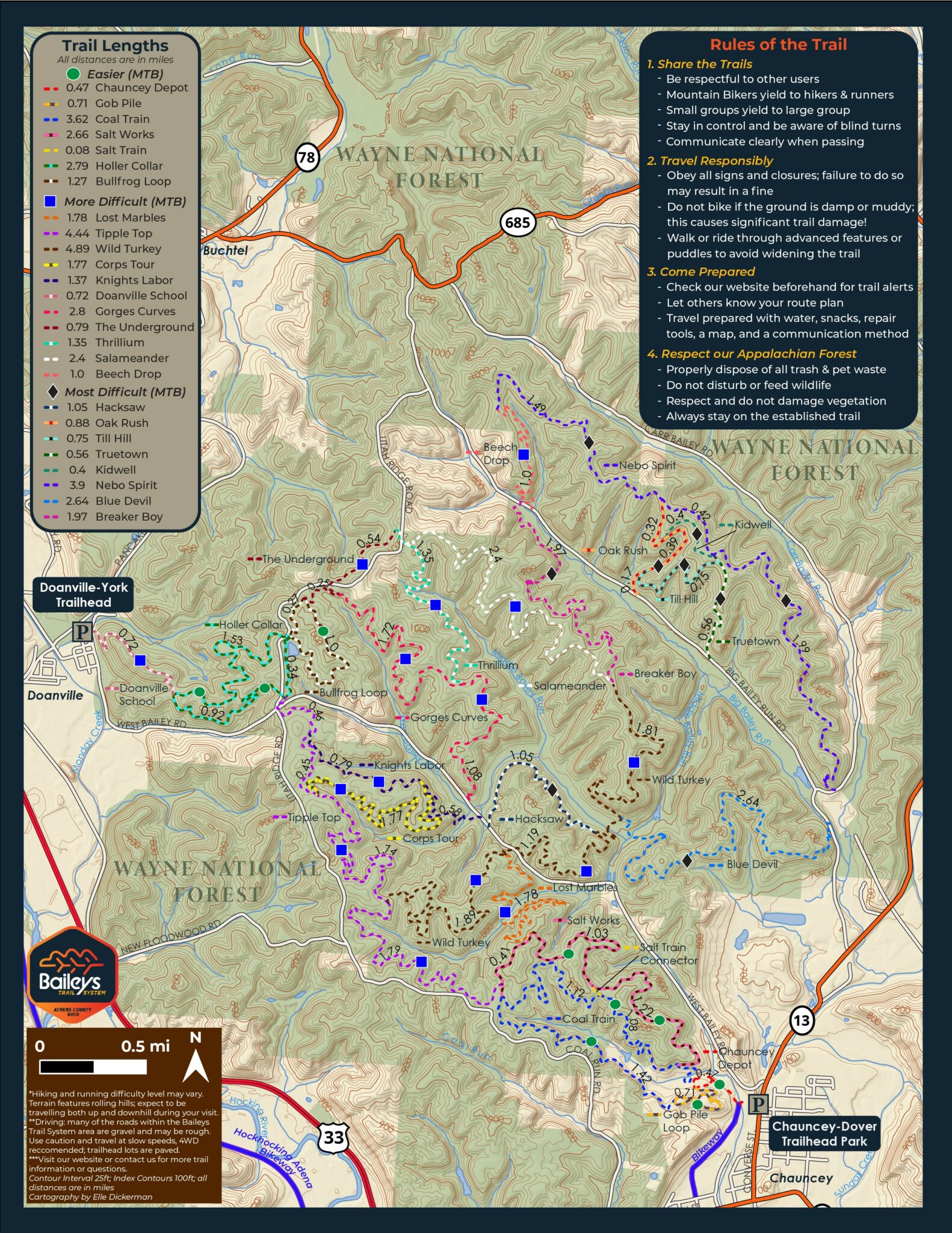

ATHENS, Ohio — The federal government took a major step forward Friday toward opening more than 2,800 acres of Ohio’s only national forest to oil and gas development, drawing immediate praise from the energy industry and sharp criticism from environmental advocates.
The U.S. Bureau of Land Management (BLM) announced a lease sale scheduled for September 15, 2026, encompassing 41 parcels of land totaling 2,840 acres within the Wayne National Forest.
The upcoming sale brings hydraulic fracturing—commonly known as fracking—far closer to fruition in the forest for the first time, a goal that has been the subject of political and legal maneuvering since at least 2016. If finalized, the leases will grant specific energy companies legal rights to the land and the minerals buried beneath it.
A Patchwork Forest Under Late-Stage Review
Unlike many traditional national forests, the Wayne National Forest is unique because it is not one contiguous plot of land. Instead, it exists as three separate swaths scattered across southeast Ohio. The specific leases up for sale sit near Marietta, Ohio, and Parkersburg, West Virginia.
The announcement comes amid a broader, aggressive push by the administration to open public lands to the energy industry, mirroring actions taken to allow development in parts of Utah and Alaska while rolling back procedural timelines, public comment rules, and bonding requirements. Concurrently, the state of Ohio has opened roughly 22,000 acres of its own state parks and wildlife areas to oil and gas companies since 2024 following the passage of state-level legislation.
While the September lease sale marks a massive milestone, winning bidders must still obtain a BLM permit to drill before breaking ground.
The Battle Over Environmental Impact
Environmental groups argue that the environmental analysis supporting the sale is deeply flawed. Wendy Park, an attorney with the Center for Biological Diversity—which has fought the leasing effort in court—warned that parallel litigation involving previously leased lands could still impact the upcoming sale.
According to opponents, modern fracking threatens the forest’s recreational value and puts local wildlife at risk, including the endangered Indiana bat. The process introduces heavy truck traffic, light pollution, and persistent industrial noise into the wilderness.
“Is there no place left in Ohio that’s safe from fracking?” Park said, noting that nearly every other corner of the state has already seen development.
Industry representatives paint a very different picture. Mike Chadsey, a spokesman for the Ohio Oil and Gas Association, noted that while “unconventional” horizontal fracking wells would be new to the Wayne, the forest has safely hosted traditional, shallower vertical oil wells since 1990.
Chadsey defended the leasing process as “deliberate, transparent, and built on years of environmental review,” adding that responsible energy development and environmental stewardship can coexist. Furthermore, because of the Wayne’s patchwork geography, Chadsey argued that leasing federal minerals allows adjacent private landowners to finally realize the full economic potential of their own property.
Public Comment Window Now Open
The government’s announcement has officially triggered a 30-day public protest period. The window for community input opened today and will formally close on August 17, 2026. Members of the public who wish to submit formal comments or objections can do so directly through the Bureau of Land Management’s online portal.