
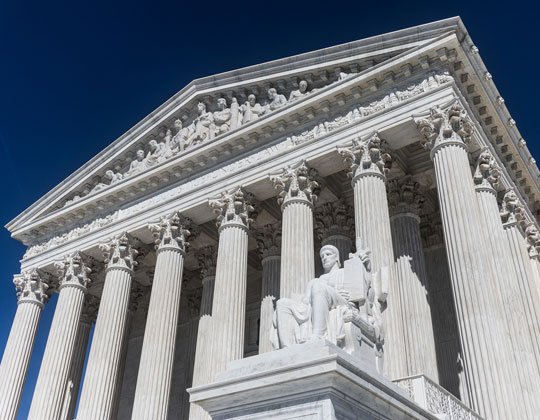

COLUMBUS, Ohio — In a major break from national party lines, Ohio Governor Mike DeWine issued a scathing response to the U.S. Supreme Court’s decision on Thursday, which paves the way for the federal government to immediately strip legal status from hundreds of thousands of migrants.
The 6-3 ruling in Mullin v. Doe effectively ends Temporary Protected Status (TPS) protections for thousands of Haitian and Syrian nationals legally residing in the United States.
In a highly critical public statement, the Republican governor warned that the ruling will instantly turn more than 10,000 legally employed, law-abiding Haitian residents in Ohio into undocumented immigrants subject to immediate deportation, creating an economic and humanitarian crisis for local communities.
“Today’s decision is a legal decision,” DeWine said. “As I have stated in the past, the policy to remove these individuals from this country is a mistake.”

The Massive Impact on Springfield and Ohio’s Economy
The Supreme Court’s ruling directly impacts a massive migrant workforce in Ohio, primarily concentrated in the manufacturing and agricultural hub of Springfield.
DeWine emphasized that the sudden status change creates a logistical and legal nightmare for both families and local businesses who rely heavily on these workers.
“As a result of today’s ruling, the over 10,000 Haitians who have been living in Ohio (mostly in the Springfield area) legally through TPS will now be here illegally and will be subject to immediate deportation,” DeWine warned. “This also means that while these Haitians were working and contributing to our community and economy yesterday, today it is now illegal to employ them.”
The governor concluded that abruptly changing the immigration status of these long-term residents is “not in the best interest of the United States nor Ohio.”
The Supreme Court Case: Security vs. Judicial Oversight
The high-stakes legal battle culminated after the Department of Homeland Security (DHS) moved to end decades-long humanitarian TPS designations for Haiti and Syria, claiming conditions in those home countries had sufficiently stabilized.
Lower federal courts in New York and Washington, D.C. initially blocked the termination, ruling that the administration’s process was deeply flawed and fueled by discriminatory animus.
However, writing for the 6-3 conservative majority, Supreme Court Justice Samuel Alito overturned those injunctions. The Court ruled that federal statutory law explicitly bars the judicial branch from reviewing the DHS Secretary’s ultimate decisions regarding the termination or extension of temporary protected status. Alito also rejected arguments that the policy was unconstitutionally motivated by racial bias.
The three liberal-leaning Supreme Court justices dissented from the majority opinion.
A Dire Humanitarian Outlook
DeWine’s public pushback also focused on the sheer danger of executing immediate deportations back to Haiti, a nation currently gripped by total civil collapse.
“The situation in Haiti could hardly be much worse,” DeWine noted. “The violent gangs run most of the country. The government barely functions. And, the economy is in shambles.”
The governor pointed out the intense irony of federal policy, noting that while DHS expects thousands of people to return to Haiti, the U.S. federal government still maintains an active, urgent advisory telling Americans not to travel there. Furthermore, the Federal Aviation Administration (FAA) currently prohibits all U.S. commercial air carriers from flying into Haitian airspace because of the persistent danger of gang members shooting at active planes.
Under the rules finalized by the Supreme Court’s decision, TPS holders from Syria and Haiti are immediately vulnerable to federal deportation proceedings, even if they have other separate applications for legal immigration status currently in progress.