
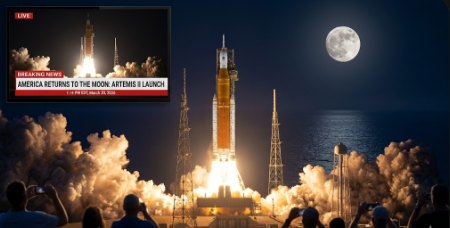

KENNEDY SPACE CENTER, Fla. — For the first time in over fifty years, humanity is preparing to send a crew back to the lunar vicinity. NASA has officially entered the final countdown for Artemis II, a historic 10-day mission that will see four astronauts venture around the Moon, signaling a bold new chapter in deep-space exploration.
The agency is targeting a launch window opening at 6:24 p.m. EDT on Wednesday, April 1, 2026. If the Florida weather or technical factors intervene, backup opportunities remain available through April 6.
The Crew and the Mission
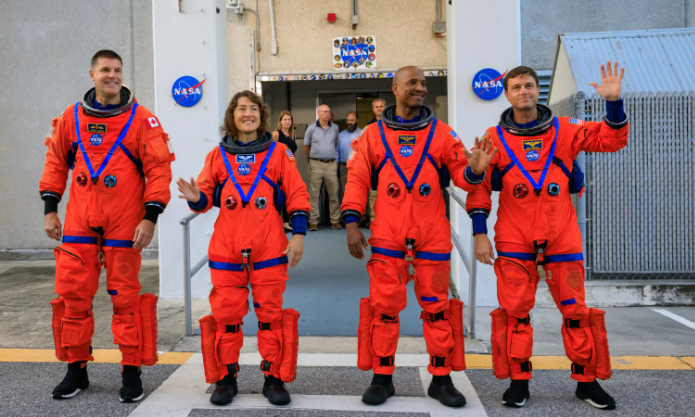
The mission features a diverse international team tasked with testing the limits of the Orion spacecraft:
- Reid Wiseman (NASA): Commander
- Victor Glover (NASA): Pilot
- Christina Koch (NASA): Mission Specialist
- Jeremy Hansen (CSA): Mission Specialist
While the Artemis I mission proved the Space Launch System (SLS) rocket and Orion capsule could handle the journey solo, Artemis II is the ultimate “stress test” for life support. The crew will manually pilot the craft in high Earth orbit before embarking on a lunar flyby that will lay the groundwork for future landings.

Countdown to History: Key Events
NASA has scheduled a series of briefings and milestones leading up to the roar of the SLS engines:
| Date | Time (EDT) | Event |
| Monday, March 30 | 5:00 p.m. | Mission Management Update: Post-meeting status on launch readiness. |
| Tuesday, March 31 | 1:00 p.m. | Prelaunch News Conference: Final technical and weather outlook. |
| Wednesday, April 1 | 7:45 a.m. | Tanking Operations: Loading the “Orange Rocket” with super-cooled propellant. |
| Wednesday, April 1 | 12:50 p.m. | Live Launch Coverage: NASA+ and YouTube coverage begins. |
A Global Audience
NASA is offering multiple ways for the world to tune in. Beyond the standard video streams, the agency is hosting a Virtual Guest Program, allowing space enthusiasts to receive a digital passport stamp and curated resources.
“This mission is part of a golden age of exploration,” NASA stated in their advisory. “We are building the foundation for the first crewed missions to Mars.”
Once the crew clears Earth’s atmosphere, real-time views from the Orion spacecraft will be streamed as bandwidth allows, providing a front-row seat to the Moon’s cratered surface as seen through the eyes of the four explorers.
What Happens Next?
Following a successful flyby, the crew will return for a high-speed splashdown in the Pacific Ocean. Their data will be critical for Artemis III, the mission currently slated to return boots to the lunar South Pole.