
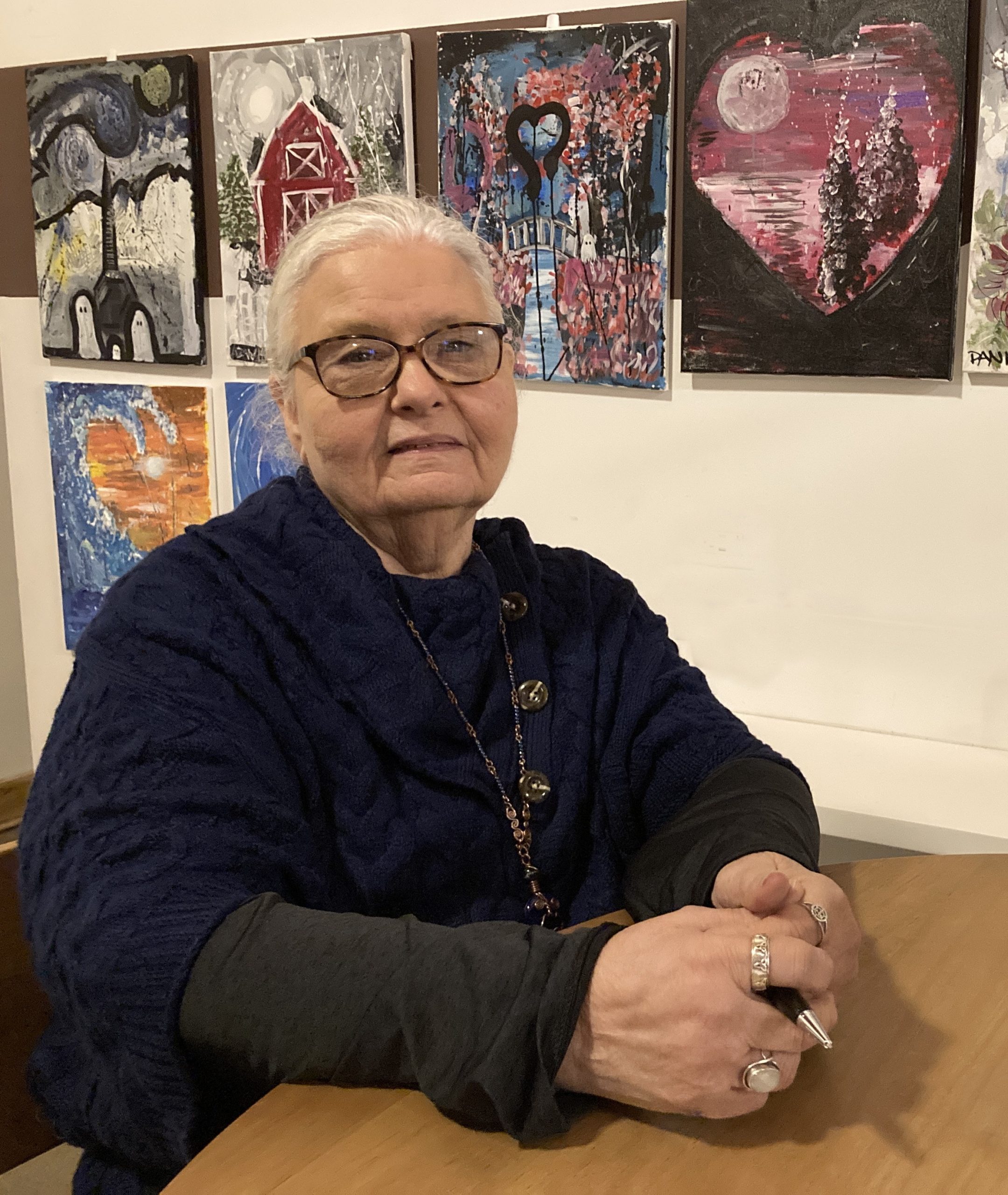

Chillicothe & Ross County — As a follow-up to my tour of the homeless shelter and interview with its director, I asked what the alternatives are if the shelter is full of a local leader in providing for the unhoused.
Julie Bolen, Executive Director of the Ross County Community Action Coalition, had welcomed me into their Resource Center that includes the Chillicothe homeless shelter, on December 4th. Then on January 12th, I sat down with Linda Hoover to hear what can be done if the shelter is full…which it usually is during cold spells.
Hoover, herself a member of Community Action in Pickaway County, is the founder of the separate “So. Ohio HART” (Homeless Advocacy Response Team), serving Ross, Pickaway, Pike, Fayette, and Highland counties. She had approached me during Chillicothe Council’s deliberations on the anti-camping ordinance / Chapter 555 on March 3rd, 2025, to share her view on the struggle.

Hoover was able to sit down with me – as the weather started to get cold again – at 50 West Brewing Company in Chillicothe. She spent about an hour chatting about what is available aside from Community Action’s Resource Center…and about a current crisis in funding at the state and national level. Listen to that in four parts below.
Her answer to what options are there ‘if the shelter is full’ is ‘not nearly enough,’ and pretty much no shelter except what you can make yourself. She says there are domestic violence shelters for women with up to only three children…but nothing else.
Hoover also provided a follow-up document “to stress the critical situation Housing and Homeless services face” from cuts / a delay in funds from the federal department of Housing and Urban Development (HUD). That is included at the end, with clickable links.
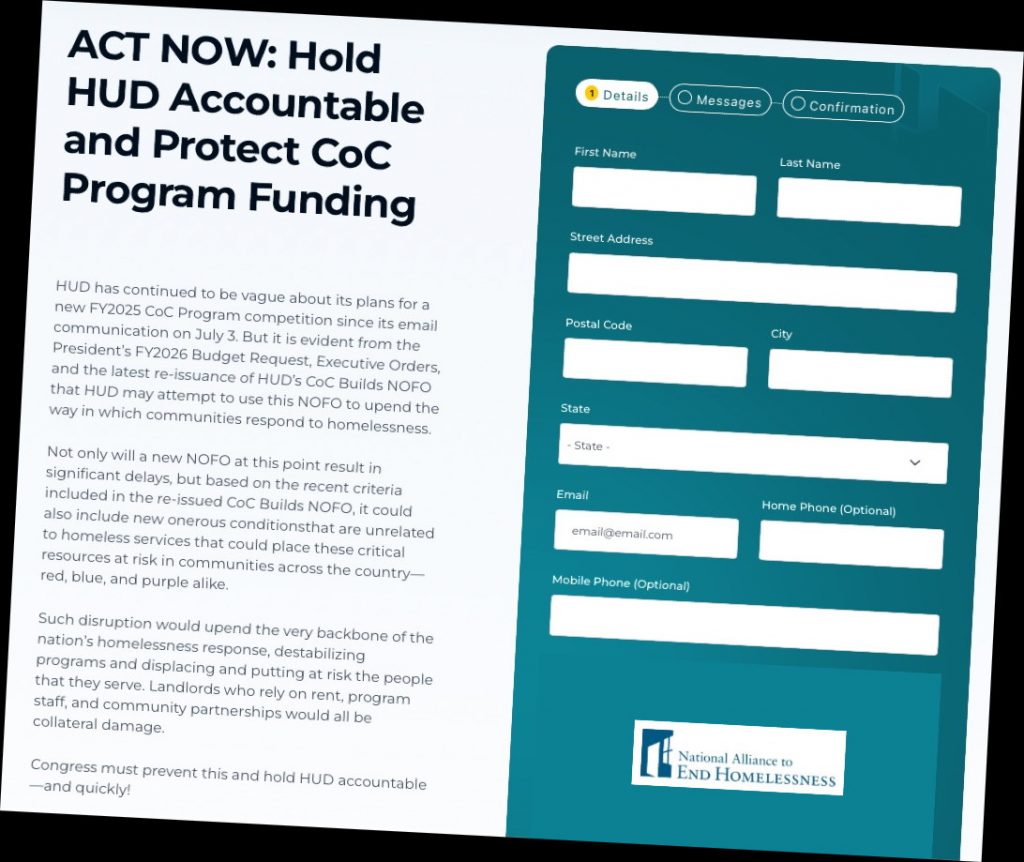
One link she urged to follow is a customizable form letter / email by the National Alliance to End Homelessness. By inputting your postal address, it can be send it to all your members of Congress.
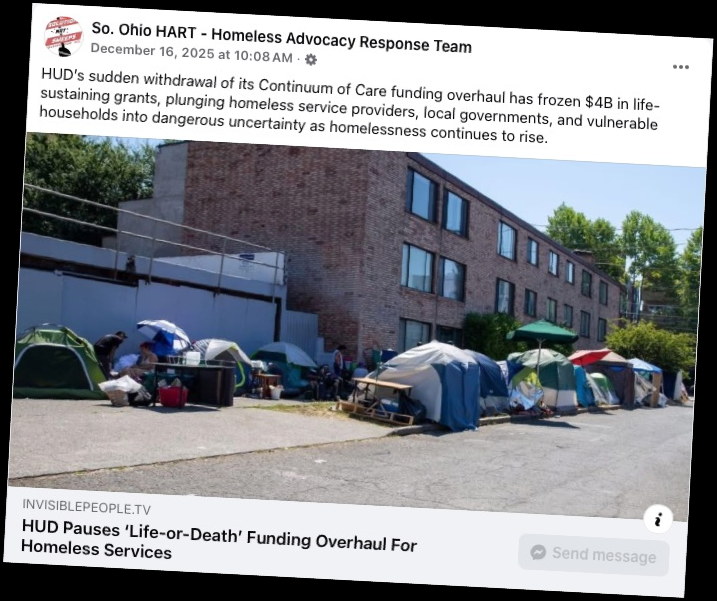
Learn more on the Facebook page of So. Ohio HART, especially December 16th shares of posts by InvisiblePeople.TV: “What’s At Stake With Trump’s CoC Funding Cuts” and “HUD Pauses ‘Life-or-Death’ Funding Overhaul For Homeless Services.”
And, while meeting Hoover at 50 West, I happened to find naturalist Amy Fitton who has coordinated litter cleanup sessions at abandoned homeless camps. She mentioned that past Ross County Park District director Joe Letsche has reorganized his nonprofits that help with that: Clean Streams Ohio and the Lower Scioto Conservancy are now coordinated as “The Intercept Project.” Learn more on their Facebook page or website.
Our hour-long chat, broken up into four parts – with outlines of each:
Part 1
- Hoover interacts with different homeless providers and municipalities
- Best practice guidelines established by the National Alliance to End Homelessness and others
- Chillicothe homeless shelter had to cut beds from about 89 to about 60
- That took a huge chunk out of available resources
- The homeless are farther back in the woods, not visible now
- Mental health issues like anxiety keeps them away from others
- There are no other options – no funding
- Now there are families living in cars with children
- Homelessness has gotten worse in the last year
- There are not really any options if the shelter is full
- Chillicothe Police have not really taken any action after passage of the anti-camping ordinance
- Some homeless people will shopllift to get into jail shelter
- Every day she sees homeless walking at the east end of Main Street, from the shelter on Eastern Avenue, to get food
Part 2
- What is the “Continuum of Care”? (A national framework)
- The “Rapid Rehousing” program helps with a deposit and first few rent payments
- HUD cuts / delays could cause loss of $131B in Ohio, 13K households
- Injunction on that until January 30th – Congress needs to vote on it
- If homelessness is not prevented at its start, it costs 3x more afterward
- Creates a burden on emergency services, first responders, business owners to run off homeless or repair damage
- How to contact Hoover and learn more: email, HART webpage
- Email only, phone is not available
- She will call around for assistance is someone ask her for help
- Chillicothe shelter setbacks, plans
Part 3
- Why do people complain but won’t want provide a solution?
- They offered to buy trash bags for local homeless in 2019 or 2020
- Many things could have been done earlier
- Most Scioto Valley homeless shelters are on overflow
- Sometimes they seek any kind of bedding to help homeless get in from the cold
- The homeless know what they need to do to survive, but just need a little help
- The few on drugs don’t, though
- Some homeless are so afraid after bad experiences
- Many homeless are out there hidden, won’t trust – takes a lot to gain their trust
- They sometimes refuse resources
- They don’t want to feel obligated, have a sense of pride and want that amount of dignity
- Some can’t be in the shelter with other people sleeping 3 feet away
- McArthur Gardens – “permanent supportive housing”
- They need more people and agencies to be active
- Don’t think ‘someone else will take care of them’ – no, you have to advocate
- Possibly 70% cuts at the Federal level
Part 4
- Monthly “Continuum of Care” meetings in Ross County
- Outside influences are wanting to build workforce or recreational housing, leaving a deficit of affordable housing
- Even if people can be lined up with resources, there may not be anywhere to put them
- Too many companies are coming in and buying properties, but not using for low or even middle-class housing
- Using many for recreational housing like Air B&B, etc.
- Addiction and alcoholism is no longer the face of homelessness – now also families
- Use an online simple form letter to complain about HUD cuts / delays
- the end of the interview
Hoover’s statement she shared after our chat:
Follow up to the HUD NOFO debacle
On January 8, the U.S. Department of Housing and Urban Development (HUD) issued a notice announcing that the fiscal year 2024 – 2025 (FY24-25) Continuum of Care (CoC) NOFO would reopen on Friday, January 9, 2026, and remain open until Monday, February 9, 2026. The notice also stated that HUD anticipates being able to select awards no later than late March 2026. View HUD’s notice here1. HUD has made clear that if the court order is no longer in effect, it will not continue processing awards under the FY24-25 NOFO and that it intends to implement the NOFO issued on December 19, 2025. The case is continuing to final judgment on an expedited basis.
HUD made this announcement pursuant to a preliminary injunction2 granted in National Alliance to End Homelessness et. al. v. HUD, a case brought by the National Alliance to End Homelessness and National Low Income Housing Coalition (NLIHC), local governments, and other nonprofit organizations, which seeks to prevent HUD’s harmful attempt to stop funding evidence-based permanent housing programs. This preliminary injunction temporarily blocks HUD from canceling the FY24-25 NOFO and issuing a new NOFO that could result in immediate housing instability or a return to homelessness for more than 170,000 people. The preliminary injunction protects individuals, families, veterans, seniors, youth, and others from displacement during the winter months.
Read the full complaint filed on December 1, 2025 here3.
Read the Court Order issued by Judge Mary S. McElroy of the United States District Court for the District of Rhode Island on December 23, 2025 here4.
- https://www.hud.gov/hud-partners/community-coc
- https://nlihc.org/sites/default/files/RI_Court_Order_CoC_Nofo.pdf
- https://democracyforward.org/wp-content/uploads/2025/12/NAEH-v-HUD-25-cv-636-Complaint-with-civil-cover-sheet-and-summons.pdf
- https://nlihc.org/sites/default/files/RI_Court_Order_CoC_Nofo.pdf
Key Impacts on Ohio
- Housing Loss: The primary effect is the potential displacement of 10,000 Ohioans currently in stable, permanent supportive housing, including veterans, seniors, people with disabilities, and families.
- Funding Gaps: Due to administrative delays and a federal court injunction surrounding the new NOFO, current CoC grants are set to begin expiring in January 2026, with most affected by May 2026. This creates a funding gap that could force providers to shut down or reduce services.
- Shift in Housing Strategy: The proposed changes by the U.S. Department of Housing and Urban Development (HUD) aimed to cap permanent housing funding at 30% of a CoC’s allocation, a significant drop from the 85-90% many Ohio communities currently use for these effective, long-term solutions. This policy shift would redirect funds towards shorter-term transitional housing, a model that advocates argue is less effective for chronic homelessness.
- Increased Public Costs: Without stable housing, affected individuals are more likely to cycle through emergency rooms, shelters, and jails, which are significantly more expensive for taxpayers than supportive housing.
- Administrative Chaos: The last-minute changes have created significant uncertainty and increased administrative burdens for local agencies, who must now navigate a complex application process for renewal funding that was initially intended to be a streamlined, two-year cycle.
Current Status
A federal court issued a preliminary injunction on December 23, 2025, ordering HUD to pause the new FY2025 CoC NOFO and process renewals under the previous FY2024-2025 rules. The Ohio Balance of State CoC (BoSCoC) competition is currently paused pending further guidance from HUD and the court.
Advocacy groups like the Coalition on Homelessness and Housing in Ohio (COHHIO) are urging constituents to contact federal representatives to demand that all eligible renewals be processed immediately to prevent service disruptions.
COHHIO’S update on the COC NOFO progress: https://cohhio.org/ohio-boscoc-update-on-fy2025-coc-program-nofo-01-07-2026/
That is why So. Ohio HART is urging ALL Housing and Homeless Service providers to voice their concerns now: We cannot and should not wait “for someone else to do it”. It is our responsibility as providers, resources, service providers to speak up for this vital funding… EACH AND EVERY ONE!
If they don’t, they will get exactly what they asked for ….. disaster!
What we want:
- Full funding to renew all existing tenant-based voucher contracts, to ensure the people and families who rely on an HCV or EHV to keep a roof over their heads do not lose their assistance. Check out the “EHV Funding Cliff Mobilization Toolkit” for more information, including talking points and resources.
- $4.922 billion for HUD’s Homeless Assistance Grants (HAG) program, and for HUD to stick to its commitment to a two-year Notice of Funding Opportunity (NOFO) for the Continuum of Care Program.
- $5.7 billion for public housing operations, and at least $5 billion to address public housing capital needs.
- $15 million for the Eviction Protection Grant Program (EPGP), as provided in the Senate’s spending bill.
- At least $1.3 billion for HUD’s Indian Housing Block Grant (IHBG) program and $150 million for IHBG-Competitive funds, targeted to Tribes with the greatest needs.
Where Agencies can advocate: https://nlihc.quorum.us/campaign/81487/
Where Advocates, Volunteers, Outreach, other Providers can voice their concerns: https://endhomelessness.org/action/act-now-hold-hud-accountable-and-protect-coc-program-funding/