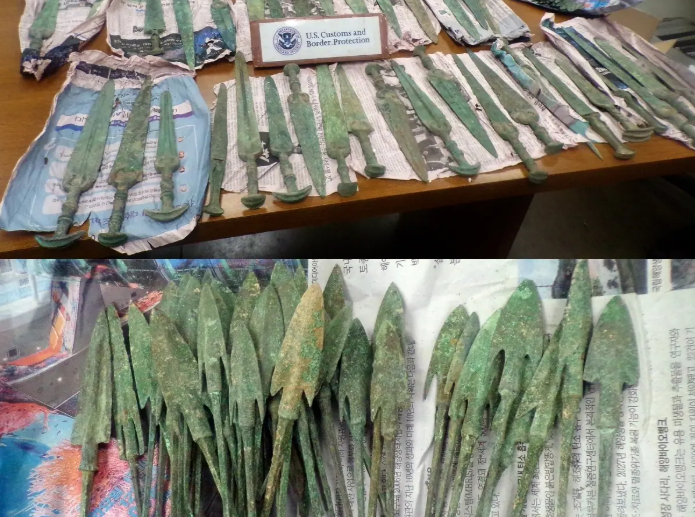

PHILADELPHIA — February 28, 2026 — U.S. Customs and Border Protection (CBP) officers in Philadelphia recently intercepted a shipment containing nearly 4,000-year-old artifacts from the Bronze Age, preventing them from entering the U.S. illegally.
On February 18, CBP officers seized 36 copper-alloy short swords and 50 copper-alloy arrowheads that had been unlawfully imported from the United Arab Emirates. The shipment, which arrived on an express delivery flight on October 16, was destined for an address in Jacksonville, Florida. It was originally declared as “metal decoration articles,” but x-ray screening revealed sword-like objects inside.
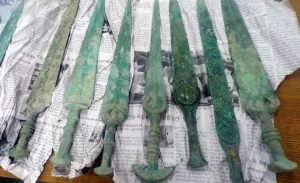
Suspecting the items were cultural artifacts, CBP detained the shipment and contacted the National Targeting Center’s Antiquities Unit. Archaeologists from a local Philadelphia university verified the items as originating from the Talish Mountains region near the Caspian Sea in Iran, dating to the later 2nd millennium BCE, approximately 1600–1000 BCE. Investigators believe the artifacts may have been looted from burial sites.

“CBP officers strive to rescue cultural artifacts from the grips of illicit international traders who plunder and exploit another nation’s heritage for profit,” said Elliot N. Ortiz, Acting Area Port Director in Philadelphia. “Smuggling these treasures not only violates U.S. import laws but also undermines efforts to preserve and protect cultural history.”
Under U.S. law, the importation of cultural artifacts requires proper export permits from the country of origin. Even legally purchased items cannot be imported without such documentation. CBP will safeguard the artifacts until a final disposition is determined.
CBP officers and agriculture specialists at the nation’s ports of entry continue to screen travelers and cargo for illicit items, including narcotics, weapons, counterfeit goods, and prohibited agricultural products, protecting both U.S. public safety and cultural heritage.