
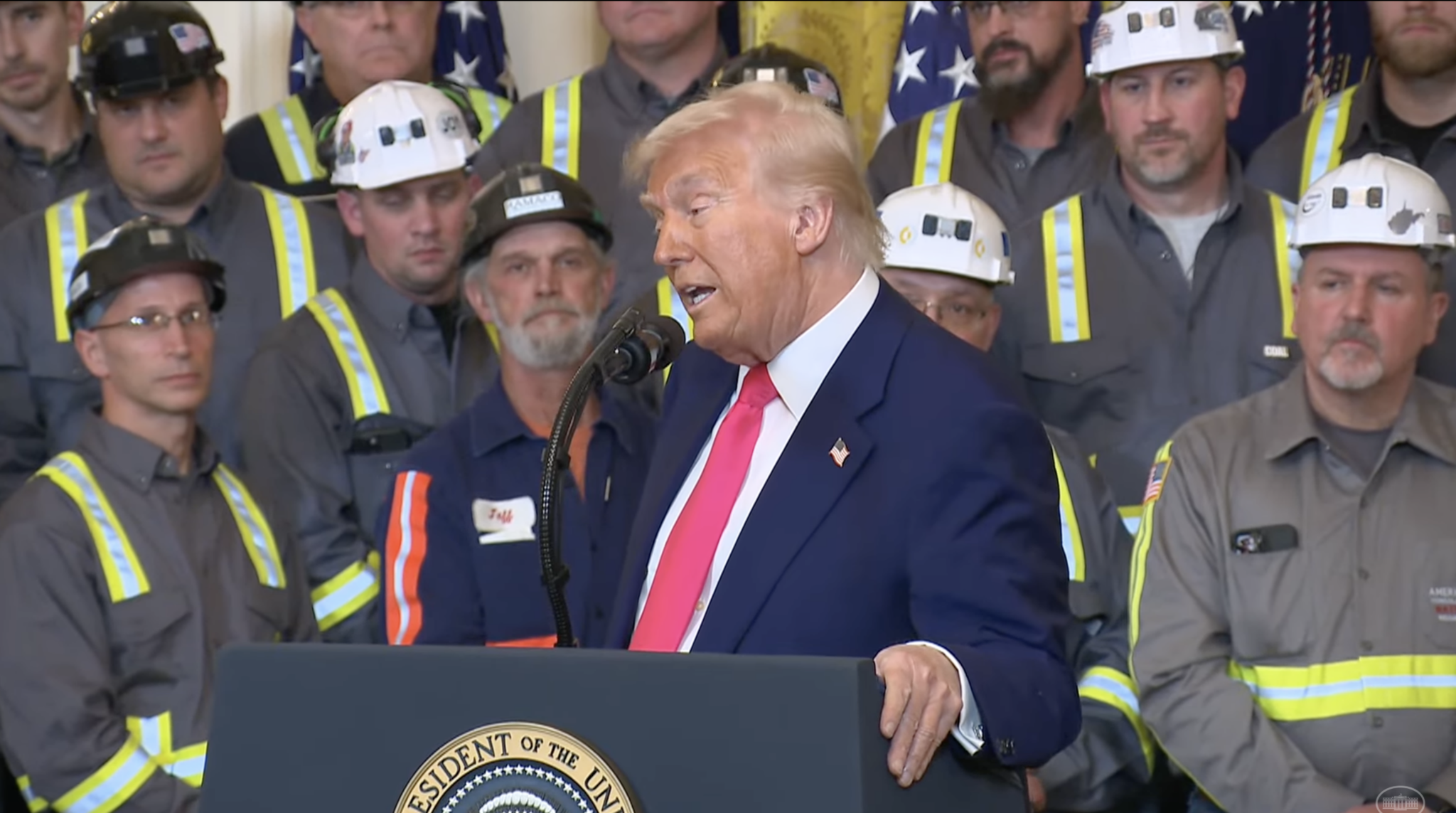

WASHINGTON, D.C. — President Donald J. Trump joined the CEOs of America’s most powerful technology firms at the White House on Wednesday to sign the Ratepayer Protection Pledge, a landmark agreement designed to ensure the artificial intelligence (AI) boom does not result in higher electricity bills for American households.
The pledge, which fulfills a promise made during the President’s State of the Union address last week, requires tech giants to fully cover the costs of new energy infrastructure required to power massive AI data centers.
“Paying Their Own Way”
The agreement effectively shifts the financial burden of the nation’s rapidly expanding digital infrastructure away from local residents and onto the balance sheets of “Big Tech.”
“Under this new agreement, Big Tech companies are committing to fully cover the cost of increased electricity production required for AI data centers,” President Trump told the gathered leaders. “That means prices for American communities will not go up, but in many cases, will actually come down.”

The pledge was signed by a “who’s who” of the industry, including:
- Amazon
- Meta
- Microsoft
- OpenAI
- Oracle
- xAI
A Market-Driven Alternative to Bans
White House Special Advisor for AI and Crypto David Sacks noted that the Trump administration’s approach serves as a sharp contrast to proposals from some Congressional Democrats. Sacks specifically cited Senator Bernie Sanders’ calls for a total ban on new data centers, arguing that such a move would halt a “construction boom” currently driving blue-collar wage growth.
“The right approach to data centers is not to stop progress altogether, but rather to protect residential ratepayers from price increases,” Sacks said. He added that the pledge may actually lower prices for neighbors when AI companies sell excess power from their private facilities back to the public grid.
Industry Leaders Step Up
The signing ceremony featured several specific commitments toward American energy independence:
- xAI & SpaceX: President and COO Gwynne Shotwell announced that xAI will develop 1.2 gigawatts of dedicated power for its supercomputers. The company plans to expand the world’s largest “Megapack” installation, capable of providing backup power for cities the size of Memphis, Tennessee.
- Amazon & Google: CEOs from both firms expressed support for the administration’s vision, with Google President Ruth Porat stating the move is critical to securing America’s global AI leadership through “abundant and affordable energy.”
- Meta: Executives noted that the pledge provides the “certainty” needed to continue an infrastructure boom they likened to the era following World War II.
Winning the “Affordability Battle”
Energy Secretary Chris Wright and Speaker of the House Mike Johnson praised the initiative as a “win-win-win,” emphasizing that the United States can lead the world in AI without sacrificing the financial stability of working-class families.
“Trust is not given by communities; it is built over time,” Speaker Johnson said. “I think this pledge is a huge part of building that important foundation for the future.”
By allowing AI companies to essentially operate as their own power companies, the administration believes it has found a path to strengthen grid resilience while creating thousands of local jobs in the communities where these data centers are built.