
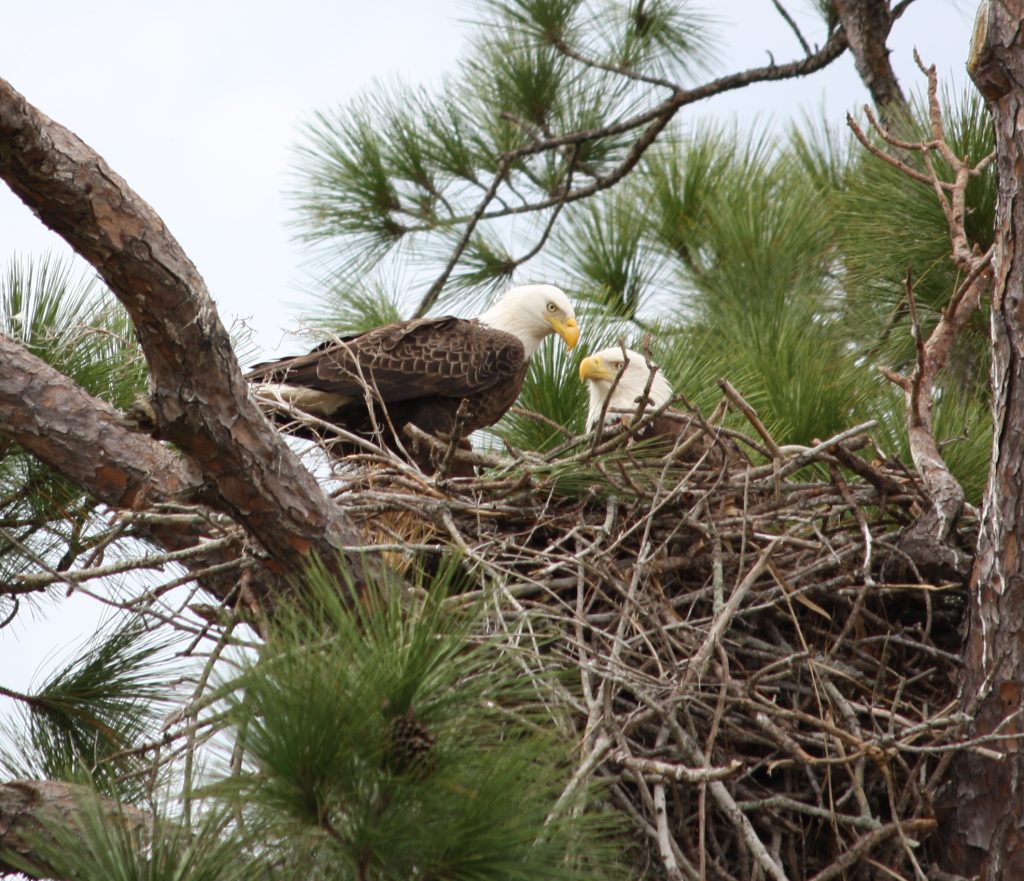

ROSS COUNTY, Ohio — Ross County emerged as one of Ohio’s leading locations for bald eagle sightings during a statewide midwinter count, with 20 bald eagles reported in January, according to the Ohio Department of Natural Resources (ODNR) Division of Wildlife.
Across the state, 715 bald eagles were documented through 391 public reports submitted between Jan. 7 and Jan. 21 as part of a citizen science survey conducted during the nation’s 250th anniversary year. Observers reported 592 adult eagles and 123 immature birds, highlighting the continued strength of Ohio’s growing eagle population.
Ross County tied with Lucas and Sandusky counties for the fifth-highest number of eagle observations statewide, underscoring southern Ohio’s importance as prime habitat for the national bird. Major river systems, including the Scioto River, provide ideal winter feeding and nesting areas that attract both adult and immature eagles.

Delaware and Franklin counties led the state with 26 eagle sightings each, followed by Erie County with 24. Eagles were reported in all 88 Ohio counties, reflecting the species’ remarkable recovery.
According to ODNR, Ohio’s bald eagle population has surged in recent years. A 2025 nest census identified 964 active nests statewide, up from 707 in 2020, with nests found in 87 counties. The dramatic rebound marks a major conservation success for a species that had only four nesting pairs in Ohio in 1979.
Winter months offer some of the best opportunities to spot bald eagles, as leafless trees improve visibility and nesting activity begins. While adult eagles are easily recognized by their white heads and tails, immature eagles display mottled brown-and-white feathers for several years before reaching full maturity.
ODNR reminds residents that bald eagles are protected under state and federal law, and viewers should keep a respectful distance of at least 100 yards to avoid disturbing nesting birds.
Conservation efforts supporting bald eagles are funded through wildlife license plates, tax donations, wildlife stamps, and hunting and fishing license revenue. These programs help preserve wetlands, rivers, and wooded corridors critical to eagle survival.