
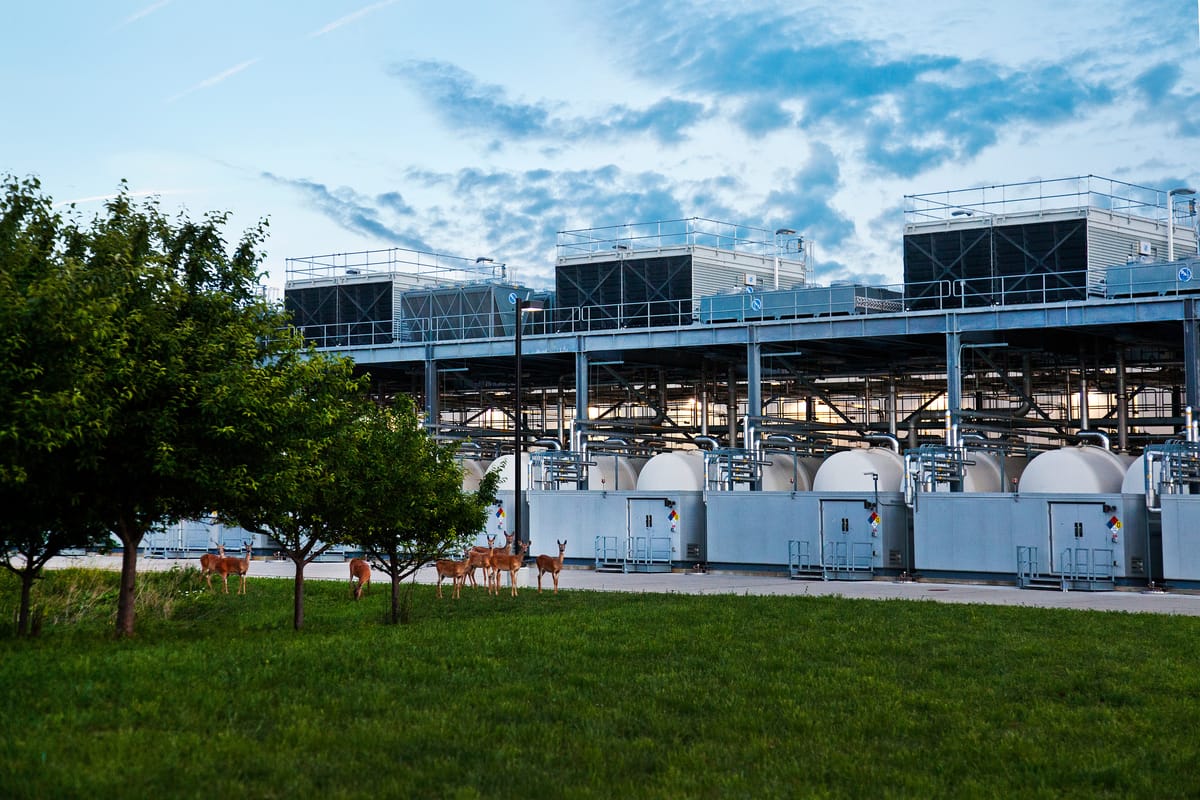

PIKETON, Ohio (March 21, 2026) — A major new artificial intelligence infrastructure project is headed to southern Ohio, as the U.S. Department of Energy announced a public-private partnership to transform a former uranium enrichment facility into a massive data center campus with its own dedicated power supply.
The project will be built at the former Portsmouth Gaseous Diffusion Plant in Pike County, now being rebranded as the PORTS Technology Campus. Plans call for a 10-gigawatt data center alongside up to 10 gigawatts of new power generation capacity.
According to federal officials, the energy component will include approximately 9.2 gigawatts of natural gas generation, along with additional on-site and grid-connected power sources. The development will also feature billions of dollars in transmission upgrades to support the high energy demands of artificial intelligence operations.
The announcement drew top federal and international leaders to the site, including Energy Secretary Chris Wright, Commerce Secretary Howard Lutnick, and Interior Secretary Doug Burgum.

Private sector partners include SoftBank Group and its affiliate SB Energy, working in collaboration with AEP Ohio to construct the power generation and transmission systems. The companies say the project includes a $4.2 billion investment in grid upgrades and new transmission lines, with assurances that it will not increase customer electricity rates.
Officials say the development is tied to a broader U.S.-Japan strategic investment initiative announced last year under Donald Trump, including more than $33 billion in Japanese funding related to the natural gas infrastructure.
The site is also expected to play a role in “Stargate,” a large-scale AI infrastructure initiative involving OpenAI, Oracle, and SoftBank, which could see up to $500 billion invested nationwide in data center expansion.
Construction on the Portsmouth project is expected to begin later this year, with officials projecting thousands of jobs and new opportunities for research in advanced fields such as fusion energy, quantum computing, and national security technologies.
However, the project comes amid growing concerns from some Ohio residents. A group of rural citizens recently filed a petition seeking a statewide constitutional amendment to ban large-scale data centers, citing environmental and economic impacts tied to energy usage and infrastructure demands.
Ohio is already a major hub for data centers, ranking fifth in the nation with roughly 200 facilities, including operations from major tech companies.
Despite the concerns, federal officials say the project could benefit the region by feeding excess generated power back into the grid, potentially helping to lower electricity costs across southern Ohio.