
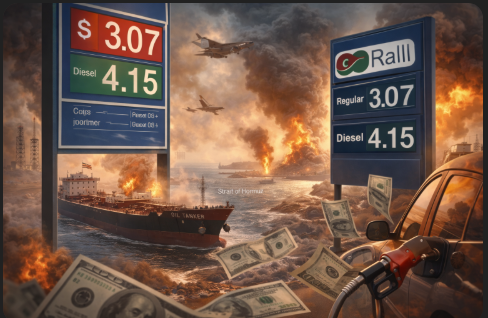

March 2, 2026 — Global energy markets have seen rapid shifts over the past 48 hours following U.S. and Israeli military strikes on Iran, reigniting concerns about Middle East stability and potential impacts on oil prices. While tensions are high, analysts stress that immediate supply disruptions remain limited.
Gas Prices See Temporary Relief, But Increases Expected
Some regions in the U.S. have experienced small declines in gas prices due to routine price cycling, but market watchers say the relief is likely short-lived. As crude prices adjust, the national average gasoline price is expected to climb above $3.00 per gallon, with an additional 10–15 cents per gallon increase possible over the next week or two depending on how markets react.
Canadian drivers may also see higher prices, particularly if the U.S. dollar strengthens, since oil is traded globally in dollars.

Leadership Change in Iran Adds Uncertainty
Iran has confirmed a leadership change following the strikes, but experts note that uncertainty does not automatically translate to lost oil supply. Market volatility is currently driven by perceived risk rather than confirmed disruptions to production.
Strait of Hormuz Remains Open
Despite escalated rhetoric, the critical Strait of Hormuz, through which about 20% of global oil flows, remains open. Analysts point out that while oil continues to move, increased insurance costs and transaction friction are driving price fluctuations. Any sustained closure, however, would have major global consequences.
OPEC+ Announces Additional Supply
In response to heightened tensions, OPEC+ will increase production by 206,000 barrels per day in April, signaling that spare capacity remains available to stabilize markets. While this does not offset a major disruption, it serves as a buffer against speculative price spikes.
Venezuela’s Limited Role
Questions about Venezuela offsetting potential supply risks are tempered by reality: current Venezuelan production remains below 1 million barrels per day, far below historical peaks and insufficient to replace Iranian output quickly.
Drivers Should Expect Gradual Increases
For U.S. motorists:
- Gas prices will likely rise gradually, rather than spiking overnight.
- Increases of roughly 10–15¢ per gallon are possible over the next couple of weeks.
- Seasonal factors, including the transition to summer gasoline blends, may add upward pressure.
Canadian drivers face an additional variable with the U.S. dollar exchange rate, which could further influence pump prices.
Key Takeaways
- Immediate supply remains uninterrupted, and the Strait of Hormuz is open.
- OPEC+ is increasing output to help stabilize markets.
- Oil prices are responding to risk and uncertainty, not confirmed supply losses.
- Price increases at the pump are expected to be incremental, with sharper jumps only if the conflict escalates or shipping is disrupted.
Market analysts continue to monitor developments closely. Drivers in the U.S. and Canada should expect modest upward pressure on fuel costs in the coming days and weeks.
For ongoing updates, GasBuddy will track wholesale and retail gasoline prices as the situation develops.