
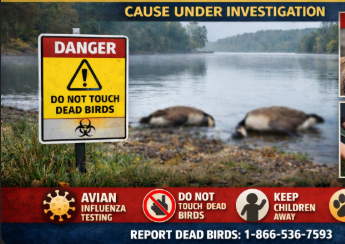

Lake White, OH – The local Health District is investigating reports of multiple dead geese found in and around Lake White and is working with state wildlife officials to determine the cause.
Officials confirmed they are in contact with the Ohio Division of Wildlife and the Ohio Department of Natural Resources (ODNR). Wildlife personnel are expected to collect samples to test for Avian Influenza, commonly known as bird flu, or other possible illnesses. Laboratory results will determine the official cause.
What Is Avian Influenza?
Avian Influenza is a virus that primarily affects wild birds and poultry. Waterfowl such as geese and ducks can carry and spread the virus through:
- Direct contact with infected birds
- Contact with saliva, nasal discharge, or feces
- Handling contaminated feathers or surfaces
Health officials emphasize that human infections are rare and typically occur only after direct handling of infected birds. According to the Centers for Disease Control and Prevention (CDC), the overall public health risk remains low, but caution is advised.

Symptoms Seen in Infected Birds
Wildlife agencies in other states have reported that infected geese may display severe neurological and respiratory distress before death. Symptoms can include:
- Twisting of the neck (torticollis)
- Tremors, seizures, or disorientation
- Difficulty breathing or gasping
- Swelling of the head
- Discharge from the eyes or nose
- Extreme lethargy
Clusters of dead Canada geese have also recently been reported near bodies of water in northeast Ohio and parts of northern Illinois.
Safety Precautions for the Public
Officials are asking residents to take the following precautions:
- Do not touch or handle sick or dead birds
- Keep children away from carcasses
- Keep pets leashed and prevent them from investigating dead birds or droppings
- Wash hands thoroughly after spending time outdoors near affected areas
- Avoid feeding ducks or geese, as congregating birds can accelerate the spread of disease
Authorities stress that simply being near the lake poses very low risk. The primary concern is direct contact with infected birds.
Dead Birds on Private Property
Residents who find a dead goose in their yard or on private residential property and are concerned may contact the Health District directly to arrange for removal. This applies only to private property and not to birds located in the lake itself.
Anyone who encounters multiple dead wild birds is encouraged to report them to state wildlife officials or contact the USDA wildlife services hotline at 1-866-536-7593.
Officials say updates will be provided once test results are available.